Vietnamese Noodles Made Easy: Pho, Bun, Mi, And Hu Tieu
Vietnamese noodle dishes share fresh herbs, savory seasonings, and carefully balanced textures, yet each bowl has its own identity. The noodle itself can change the entire meal, from silky rice strands in pho to springy wheat noodles in mi.
Knowing the difference between pho, bun, mi, and hu tieu makes it easier to choose a dish that suits your appetite. Some options are built around a hot, aromatic broth, while others pair noodles with grilled meat, vegetables, seafood, or a sweet-and-salty sauce.
Pho Hong in Austin serves several Vietnamese favorites, including beef pho, vermicelli bowls, stir-fried noodles, appetizers, rice plates, drinks, and smoothies. The restaurant is located at 2521 Rutland Drive and offers dine-in service, with delivery available during designated hours.
What Makes Each Noodle Distinct
Pho uses flat rice noodles in a clear, aromatic broth. Bun usually refers to thin, round rice vermicelli, often served at room temperature or chilled with herbs, vegetables, and a flavored fish sauce dressing. Mi is generally associated with wheat or egg noodles, giving it a more elastic bite.
Hu tieu is a southern Vietnamese noodle soup with a lighter, gently sweet broth. Depending on the preparation, it may include rice noodles, tapioca noodles, or a combination of noodle textures. Toppings often include pork, shrimp, squid, or other seafood.
These categories can overlap across regions and restaurants. A menu may use a familiar name while presenting a house-style version, so the listed ingredients and preparation are useful guides when making a choice.
Pho: A Fragrant Broth Bowl
Pho is perhaps the best-known Vietnamese noodle soup. Its foundation is a long-simmered broth seasoned with ingredients such as charred onion, ginger, star anise, cinnamon, and cloves. Beef pho may include sliced steak, brisket, tendon, meatballs, or several cuts together.
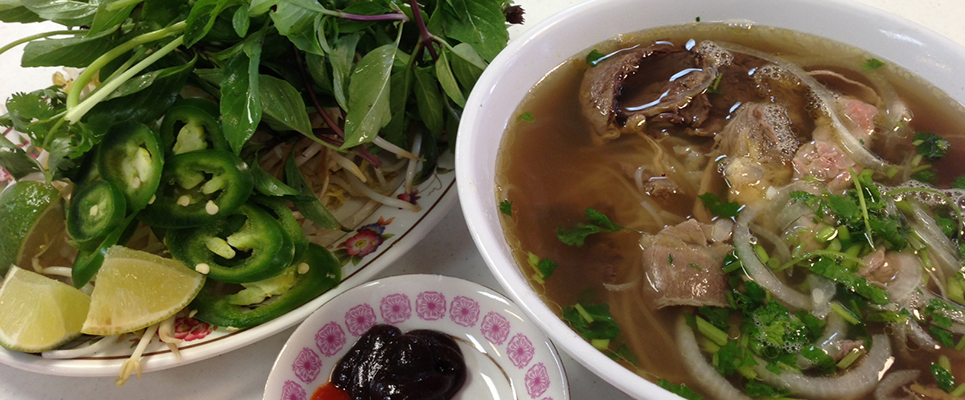
The rice noodles are soft and flat, designed to carry broth without overpowering it. Fresh herbs, bean sprouts, lime, jalapeño, and sauces let each diner adjust the final flavor. Add lime for brightness, herbs for freshness, or chili for heat.
At Pho Hong, beef pho is a natural starting point for anyone exploring Vietnamese noodle dishes. It works well as a warming meal and offers a clear way to experience the relationship between broth, noodles, meat, and garnishes.
Bun: Cool Rice Vermicelli
Bun bowls are a strong choice when you want something lighter in texture but still full of flavor. Thin rice vermicelli is layered with lettuce, cucumber, pickled vegetables, herbs, and a protein such as grilled pork, chicken, beef, or shrimp.
The dressing is often nuoc cham, a balanced sauce made with fish sauce, lime, sugar, garlic, and chili. It brings salty, sweet, sour, and spicy notes to the bowl. Tossing the ingredients together distributes the dressing through the noodles and vegetables.
Compared with pho, a bun bowl has less liquid and more contrast. Crisp vegetables meet tender meat, while the vermicelli provides a neutral base. Pho Hong’s vermicelli bowls suit diners looking for a fresh, customizable meal with plenty of herbs and crunch.
Mi: Wheat Noodles With Chew
Mi typically uses yellow wheat or egg noodles, which are firmer and more elastic than the rice noodles used in pho. Their slightly chewy texture makes them especially suitable for stir-fried dishes, where the noodles need to hold up beside vegetables, meat, and sauce.
A stir-fried noodle plate may include cabbage, carrots, onions, bean sprouts, chicken, beef, shrimp, or a combination of ingredients. The cooking method creates lightly browned edges and lets the sauce cling to the noodles rather than collect in a bowl.
Mi can also appear in soup preparations, depending on the regional style. If you prefer a savory noodle dish with a substantial bite and less broth, Pho Hong’s stir-fried noodle selections are worth considering.
Hu Tieu: Southern Vietnamese Comfort
Hu tieu is closely associated with southern Vietnam, particularly the Mekong Delta and Saigon-style cooking. Its broth is often clear and delicate, with a subtle sweetness from pork bones, dried seafood, or other aromatics. The flavor can feel gentler than the concentrated spice profile of some pho broths.
A bowl may contain pork slices, shrimp, ground pork, fish cake, squid, or vegetables. Some versions are served wet with broth, while hu tieu kho is a dry preparation with noodles and toppings accompanied by broth on the side.
The noodle choice is part of the appeal. Rice noodles provide a smooth, familiar texture, while tapioca-based noodles can be more translucent and springy. Hu tieu is a useful dish to know when you want a Vietnamese soup that is lighter, seafood-friendly, and texturally varied.
| Dish | Typical Noodle | Usual Format | Best For |
|---|---|---|---|
| Pho | Flat rice noodles | Hot aromatic broth | A classic soup meal |
| Bun | Thin rice vermicelli | Chilled or room-temperature bowl | Fresh herbs and crunchy vegetables |
| Mi | Wheat or egg noodles | Stir-fried or soupy | A chewy, hearty noodle texture |
| Hu Tieu | Rice or tapioca noodles | Light soup or dry noodles | Southern-style broth and varied toppings |
Find Your Best Match At Pho Hong
Start with pho if you enjoy a hot broth and want a familiar introduction to Vietnamese cuisine. Choose bun when herbs, fresh vegetables, and grilled flavors appeal to you. Mi is the better fit for a stir-fried meal with a firm, savory noodle bite.
Hu tieu is ideal for diners who want to try something beyond the most widely known Vietnamese soup. Its lighter broth and broad range of toppings make it especially appealing to people who enjoy pork, shrimp, squid, or mixed noodle textures.
Pho Hong’s broader menu also includes rice plates, appetizers, smoothies, and drinks, making it convenient for groups with different preferences. Dine-in service is available seven days a week, and delivery operates during designated hours. Check the restaurant’s current menu and hours before placing an order, since availability can vary.
Build A Balanced Noodle Order
A few simple choices can help you get more from your meal. Consider the noodle texture first, then decide whether you want broth, grilled toppings, stir-fried ingredients, or a fresh vegetable-forward bowl.
For pickup or delivery, review the restaurant’s current options and look for available savings through the Pho Hong coupon page. A coupon can be useful when ordering several dishes for a household or sharing appetizers alongside a main meal.
- Choose pho for aromatic broth, tender beef, and a warming bowl.
- Pick bun for grilled protein, herbs, vegetables, and a tangy dressing.
- Order mi when you prefer chewy wheat noodles and stir-fried flavors.
- Try hu tieu for a lighter southern-style soup with pork or seafood.
- Add an appetizer, drink, or smoothie when building a fuller meal.
Visit Pho Hong at 2521 Rutland Drive in Austin to compare these Vietnamese noodle styles in one welcoming menu. Dine in seven days a week or arrange delivery during designated service hours, and choose the bowl that matches the texture and flavor you want today.