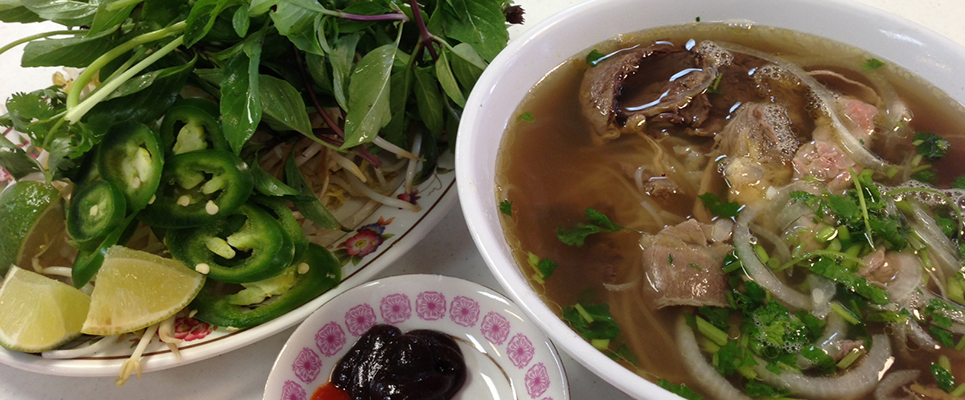
How Pho Hong's beef pho broth develops its rich hue naturally
Walking into Pho Hong on Rutland Drive, the first thing most guests notice before they even glance at the menu is the steam rising from the kitchen and the colour of the broth ladled at the service counter. That deep, mahogany tone doesn't come from a bouillon cube or a packet of powdered seasoning. It's the product of patient technique, hours of simmering, and a handful of whole spices that have been used in Vietnamese kitchens for generations.
For diners who grew up around Sydney's Cabramatta or Melbourne's Footscray, where pho stalls have served steaming bowls since the wave of Vietnamese migration in the seventies, the look of a good broth is instantly recognisable. Australians touring through Austin often remark that the bowl in front of them feels like a slice of home. That familiar warmth comes from the way we build colour into every pot, slowly and deliberately, the old-fashioned way.
The foundation: slow-roasted beef bones
The colour journey begins before any water touches the pot. We roast marrow bones and knuckle bones in our oven until the surfaces turn a deep, burnished gold. This step is where the broth's signature richness takes its first breath. The Maillard reaction between proteins and sugars on the bone's exterior creates hundreds of flavour compounds that dissolve into the liquid during the long simmer.
This isn't a quick process. Roasting takes close to an hour, with the kitchen crew turning trays regularly so nothing chars or burns. Australians who appreciate a Sunday roast will recognise the patience involved. Just as a low-and-slow lamb shoulder rewards the cook with tender, flavourful meat, slow-roasted bones reward us with a broth that carries genuine depth, body, and a hue that looks like brewed tea in a porcelain cup.
Charred aromatics: the onion and ginger method
While the bones roast, we prepare the aromatics. Halved yellow onions and thick slices of fresh ginger go onto a flat tray and finish under direct flame. The skins blacken and blister, and the flesh underneath softens into something almost sweet. These charred aromatics get dropped straight into the stockpot once the bones are ready.
The blackened skins aren't there to add bitterness. Instead, they release tannins and caramelised sugars that tint the broth with that coppery glow diners associate with proper pho. Most pho enthusiasts around Brisbane's Sunnybank or Adelaide's central market stalls know that a broth without a smoky edge simply isn't authentic. Our kitchen honours that expectation every morning, lighting fresh aromatics in the wok before sunrise so the morning prep is finished before the doors open.
Whole spice layer: building depth without additives
Next comes the sachet of whole spices: star anise, cinnamon stick, cloves, and coriander seed. We toast these briefly in a dry pan until fragrant, then bundle them into a small cloth bag. The bag floats in the simmering stock, releasing its oils slowly over many hours. We never use pre-made pho paste or liquid seasoning concentrates, because those shortcuts taste dull and crowd out the natural beef notes.
Star anise, in particular, gives the broth a faint pinkish-red shimmer when held to the light. Combined with the roasted bone colour and the charred onion tones, the result is a layered, warm amber that photographs beautifully and tastes even better. Australians who order pho through delivery apps around Parramatta or Hurstville often comment that the colour of our broth is the first sign that the meal will be worth waiting for.
The long simmer: time as the secret ingredient
We simmer our broth for a minimum of twelve hours, often longer. A heavy stockpot sits on a low flame through the night, with the lid slightly cracked so the liquid reduces gently and concentrates. This slow reduction deepens the colour as much as it deepens the flavour, thickening the broth just enough to coat the noodles and sliced beef when it's poured into the bowl.
No artificial caramel colour, no MSG powder, no beef-flavoured stock powder sneaks into the pot. The hue that arrives in your bowl is built one hour at a time, the way a good Vietnamese grandmother in Saigon would have done it. Our regulars in Austin, many of whom moved here from Perth or Hobart before settling into Texas life, often tell us that the first sip takes them straight back to family gatherings around the kitchen table.
Skimming and clarifying: why our broth looks clear yet deep
Throughout the simmer, our cooks skim the surface regularly. Foam and impurities rise to the top and get lifted away, leaving a broth that looks almost clear in the pot but reveals its true depth once it meets the herbs, lime, and sliced chilli on the serving tray. Skimming doesn't strip out the colour we've worked to build. It removes the cloudy proteins that would otherwise dull the appearance.
This balance between clarity and colour is the hallmark of an authentic pho broth. Guests often ask whether the broth is clarified using egg whites or other fining agents, and the answer is always no. We rely on gentle heat, patient skimming, and the natural fats from the bones themselves to create that glossy, satin finish. Visitors from Adelaide or Geelong who stop in after a long drive often ask about our technique after their first spoonful, and the answer is always the same: time, bones, fire, and nothing artificial.
Comparing methods and pairing your bowl
A bowl of pho made the slow, traditional way differs from instant or quick-service versions in nearly every way that matters. The colour, the aroma, the body of the broth, and the way it coats the noodles are all affected by the choices made in the kitchen. Diners who travel often notice the difference immediately, even before tasting. Below is a side-by-side look at how the two styles compare across the qualities our guests ask about most.
| Aspect | Traditional slow-simmered pho | Quick-service powdered pho |
|---|---|---|
| Colour source | Roasted bones, charred onion, whole spices | Caramel colour, powdered seasoning |
| Simmer duration | 12 to 18 hours | Under one hour |
| Common additives | None | MSG, yeast extract, hydrolyzed protein |
| Flavour profile | Deep, layered, beefy | Salty, one-dimensional |
| Aroma | Star anise, roasted marrow | Salty, metallic |
| Appearance | Clear amber, glossy | Cloudy, artificially tinted |
Once you've got a deep amber bowl in front of you, the right side dishes round out the meal beautifully. Our grilled lemongrass pork and chicken with broken rice complement the broth without overpowering it, and the contrasting textures make the table feel like a proper Vietnamese spread. If you're planning a small gathering at home, consider ordering one of our rice plates to round out the meal.
- Sip the broth plain first to appreciate the colour and aroma before adding herbs or sauce.
- Add bean sprouts, Thai basil, and sliced chilli gradually rather than all at once.
- Squeeze lime sparingly so the broth's natural brightness shines through.
- Pair your pho with a side dish like vermicelli or stir-fried noodles for a satisfying contrast in texture.
- Save leftovers in a separate container so the noodles don't soak overnight.