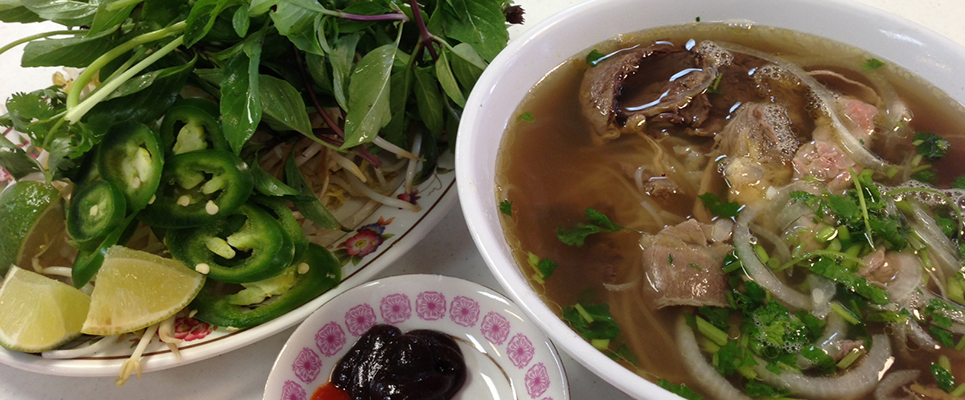
Getting extra rare beef served just the way you want it
Pho lovers in Sydney's Cabramatta, Melbourne's Richmond strip, and Brisbane's Sunnybank know the difference between a good bowl and a great one often comes down to a single request: paper-thin slices of raw beef draped across the top, seared only by the steam of the broth as you eat. Getting that request right is its own small art. The way you ask for extra rare beef on top of your pho shapes how generously the kitchen obliges, how the meat is sliced, and whether it lands at the table in the seconds before you take your first spoonful.
For Australians accustomed to ordering Vietnamese food in places where the staff might switch between English and Vietnamese mid-sentence, the phrasing can feel oddly formal at first. A friendly g'day or a quick no worries, thanks gets you a long way, but the meat order itself has its own vocabulary. Once you learn a few cues, you can speak the kitchen's language anywhere from a Footscray take-away counter to a sit-down spot on Victoria Street.
Whether you're chasing an extra slab of brisket-style raw beef, a sprinkling of fillet, or a mix of both, the trick is to be specific about how rare you want it and where you want it placed. Some diners want the raw slices buried under the noodles; others want them heaped right on top so each bite pulls a sliver through the hot broth. The good news is most Vietnamese-Australian kitchens are happy to oblige, as long as they understand exactly what you mean.
What extra rare beef on top actually means
In a classic bowl, rare beef usually arrives on top of the noodles and herbs, a few thin slices of raw fillet or eye round that turn opaque as soon as the boiling broth hits them. Asking for extra rare beef on top means you'd like more of those raw slices than the kitchen normally serves, or a thicker cut than standard. Some shops default to a token sprinkle; others pile it generously. Your request nudges them toward the latter.
The cut you choose also matters. Fillet, also called eye fillet in Australian menus, gives a buttery, almost sashimi-like texture when raw. Brisket holds more bite but takes a touch longer to cook through. A few places offer shaved rib-eye, which folds into the broth like delicate ribbons. Whichever you pick, ask for the slices to be placed on top of the noodles, not stirred in, so you control exactly how rare each bite stays.
How to phrase the request so the kitchen gets it right
Words matter when you're at the counter or about to tap the confirm order button on your phone. Clear, friendly phrasing avoids any mix-up and helps the cook prioritise your bowl.
- Could I get extra rare beef on top, please? Maybe a generous serve.
- Can you add a bit more raw beef on top? Just letting the broth cook it.
- I'd love the rare beef piled on top, and a bit extra if you can.
- Sashimi-style slices on top, please — I like mine barely kissed by the broth.
Saying sashimi-style is a neat trick in Australia because the term travels well across the Vietnamese, Japanese, and broader Asian-Australian dining scenes. Kitchen staff will almost always know you mean paper-thin slices that stay pink in the middle. A small smile and a thanks, mate goes a long way toward a generous hand at the slicing board.
Timing and temperature: when to make the ask
Ask for your extra rare beef at the moment you order, not when the bowl arrives. Once a bowl of beef noodle soup is assembled, the slices are already on top and the countdown has begun. By flagging it early, you let the kitchen plate up the meat at the very last second, which is what keeps the slices blushing in the centre when they reach you.
If you're dining in, ask the server when you order your pho, ideally before the broth is ladled. If you're ordering takeaway or delivery, write the request into the special instructions box — something like extra rare beef slices on top, please works better than a vague more meat. When the bowl travels in a closed container, the meat keeps cooking in the residual heat, so a slightly cooler pour of broth or a quicker handover can help preserve the rare finish.
Australian pho scenes and how locals actually order
Australia's Vietnamese food scene has matured into something locals actively plan around. In Sydney, you might wander into Cabramatta late on a Sunday arvo for a steaming bowl, while Melburnians often queue up along Victoria Street or head into Footscray for a quick lunch. Brisbane's Sunnybank and Adelaide's inner west have their own clusters of family-run shops. In each of these neighbourhoods, the staff tend to be warm, fast, and used to a wide range of requests.
The Australian accent comes out plainly at ordering. You'll often hear cheers, mate or no worries tossed back and forth between diner and staff, and pho shops tend to match that energy. Asking politely with a small smile, rather than a clipped instruction, usually gets you a more generous serve of raw beef. Many long-time regulars in these communities simply say, extra rare on top, thanks — short, friendly, and unmistakable to anyone who's worked behind the steam.
Pairing extra rare beef with sides and extras
Raw beef on top is a star ingredient, but the supporting cast matters.
- A handful of fresh bean sprouts and Thai basil, torn and dropped in just before eating.
- A wedge of lime squeezed over the top to cut through the richness of the beef.
- Hoisin and sriracha on the side, used sparingly so they don't drown the broth.
- A soft-boiled egg alongside your pho if you've also ordered a rice plate — and there's a solid case for it, as explained in why we recommend adding a soft-boiled egg to your rice plate.
A soft egg on the side doesn't interfere with the rare-beef moment in your pho bowl, but it rounds out the meal nicely, especially if you're sharing dishes with a mate or feeding a hungry family after school pickup. The contrast between the silky yolk and the just-warmed raw beef is hard to beat on a cool Melbourne evening or a wet Adelaide arvo.