How to Build a Perfect Bowl of Beef Pho at Home
A satisfying bowl of beef pho depends on layers: a fragrant broth, tender noodles, thinly sliced beef, fresh herbs, and carefully chosen garnishes. The goal is a clear, aromatic soup with enough depth to support every ingredient without allowing one flavor to dominate.
Pho Hong in Austin serves beef pho alongside vermicelli bowls, rice plates, stir-fried noodles, appetizers, drinks, and smoothies. Its menu can provide useful inspiration when deciding how to balance savory broth, fresh vegetables, herbs, and protein in your own kitchen.
Making pho at home does require some planning, especially if you prepare the stock from scratch. However, the process becomes manageable when each element is handled separately. You can also prepare the broth a day ahead, making the final assembly quick and relaxed.
Start with a fragrant broth
Traditional beef pho broth gets its character from roasted bones, beef, onion, ginger, and whole spices. Use marrow bones, knuckle bones, or a combination of both for body. Oxtail or brisket can add extra beef flavor and provide meat for serving.
Char the halved onion and ginger under a broiler or in a dry skillet until their surfaces are deeply browned. This step adds smokiness and helps create the recognizable aroma associated with Vietnamese noodle soup. Briefly toast star anise, cinnamon, cloves, coriander seeds, and fennel seeds before adding them to the pot.
Simmer the broth gently rather than boiling it aggressively. A low simmer helps keep the liquid clearer and produces a cleaner taste. Skim foam during the first hour, then season gradually with fish sauce, salt, and a small amount of rock sugar or regular sugar.
Choose the beef and noodles carefully
Thinly sliced raw beef is the classic choice for a quick-cooking pho topping. Tender cuts such as eye of round, sirloin, or brisket work well. Chill the meat in the freezer for 20 to 30 minutes before slicing so you can cut it into even pieces. Slice against the grain for a softer bite.
If you prefer fully cooked meat, simmer brisket or flank steak in the broth until tender, then cool and slice it. This approach adds richness to the stock and makes the bowl easier to serve to guests who do not want rare beef.
Rice noodles should be soft but springy. Fresh pho noodles can go directly into the bowl after a brief rinse, while dried noodles usually need soaking or boiling according to the package directions. Avoid overcooking them because they will continue to soften when covered with hot broth.
| Component | Recommended choice | Preparation note |
|---|---|---|
| Broth base | Beef bones and brisket | Simmer gently and skim regularly |
| Aromatics | Charred onion and ginger | Blacken lightly for depth |
| Spices | Star anise, cinnamon, cloves, coriander | Toast briefly before simmering |
| Noodles | Flat rice noodles | Cook until tender with a slight bite |
| Protein | Thin-sliced sirloin or brisket | Chill before slicing |
| Fresh toppings | Thai basil, cilantro, bean sprouts | Add just before serving |
| Acidity and heat | Lime, jalapeño, chili sauce | Serve on the side for control |
Prepare the fresh toppings
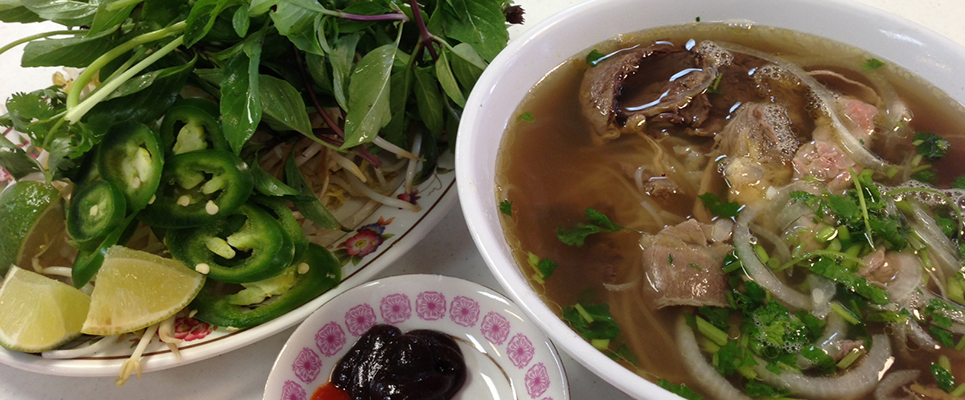
Fresh garnishes give pho its contrast. Rinse bean sprouts thoroughly, pick the leaves from Thai basil, and chop cilantro or green onion. Thinly sliced jalapeño brings heat, while lime juice adds brightness that can lift a rich beef broth.
You can also include Thai bird’s eye chiles, sliced white onion, sawtooth herb, or culantro if they are available. Keep the garnishes on a separate plate so each person can customize the bowl. This preserves the texture of delicate herbs and prevents the sprouts from becoming limp.
For another Vietnamese meal with a different structure, browse the vermicelli bowl as a reminder that fresh herbs, vegetables, and savory toppings can create balance without relying entirely on broth.
Assemble each bowl in the right order
Warm the serving bowls with hot water, then drain them. Place cooked rice noodles in the bottom, followed by raw beef slices if you are using a rare preparation. Arrange cooked brisket, meatballs, or other proteins over the noodles.
Bring the broth to a full simmer and ladle it directly over the beef. The heat will gently cook thin slices while warming the noodles. Pour enough broth to cover the ingredients but leave room for garnishes. A crowded bowl is difficult to stir and can cool too quickly.
Add green onion, cilantro, and sliced white onion immediately. Keep bean sprouts, basil, lime, jalapeño, hoisin sauce, and chili sauce on the side. This order allows the herbs to release their aroma while preserving crunchier toppings for the final bites.
Balance the flavor before serving
Taste the broth before it reaches the bowl. It should be savory, aromatic, and gently sweet, with enough salt to remain flavorful after the noodles are added. If it tastes flat, add a little fish sauce. If it feels heavy, use lime juice at the table rather than adding more seasoning to the entire pot.
Hoisin sauce and chili sauce are useful condiments, but use them sparingly. Too much can cover the spice fragrance and beef flavor. Start with a small spoonful in one corner of the bowl, then mix it into individual bites instead of stirring everything at once.
A helpful reference point is the balance found in a restaurant-style beef noodle soup: broth should remain the foundation, while beef, noodles, herbs, and sauces contribute distinct textures and flavors.
Use these practical kitchen recommendations
The best homemade pho usually comes from preparation rather than complicated technique. Make the broth in advance, organize the garnishes while it simmers, and cook noodles in small batches so every serving stays hot and springy.
Keep rare beef very cold until slicing, and use clean utensils for raw meat and fresh toppings. If you are serving several people, place the garnishes, sauces, and lime wedges in the center of the table so everyone can adjust their bowl.
- Roast the bones, onion, and ginger before building the broth.
- Simmer gently for several hours when using a from-scratch stock.
- Slice beef thinly and against the grain for tenderness.
- Cook noodles separately to prevent cloudy, starchy broth.
- Add lime, herbs, sprouts, and sauces only at serving time.
Serve the bowl while it is steaming
Pho is at its best immediately after assembly, when the broth is hot, the noodles are supple, and the herbs are still fragrant. Serve it with chopsticks and a soup spoon so each bite can include noodles, beef, broth, and a little garnish.
For a shorter preparation, use a good-quality prepared beef stock and intensify it with charred aromatics and toasted spices. For a deeper weekend project, build the stock from bones and brisket, refrigerate it overnight, and remove the solidified fat before reheating.
Gather the ingredients, let the broth become the centerpiece, and adjust each bowl at the table. When you want a restaurant-made version for comparison or a convenient meal in Austin, visit Pho Hong at 2521 Rutland Drive or check its current service and delivery hours online.