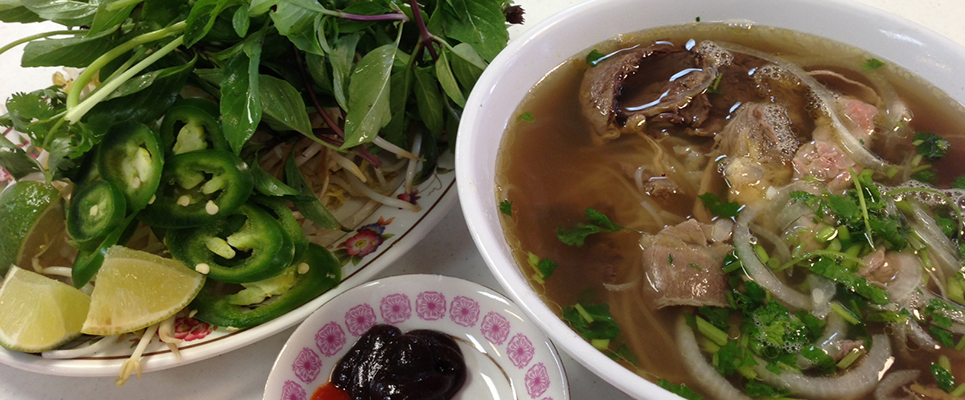
How to Eat a Rice Plate With Chopsticks and a Spoon
Rice plates, known in Vietnamese as cơm đĩa, are a staple of casual Vietnamese dining. Unlike noodle soups that demand a single dominant utensil, rice plates invite a two-tool rhythm. For Australians discovering Vietnamese cuisine in neighbourhoods like Cabramatta, Footscray, or Inala, mastering this rhythm transforms an everyday lunch into a far more satisfying experience.
Many diners in Sydney or Melbourne automatically reach for a fork when confronted with a rice plate, especially if they grew up with European-style meals. Yet the traditional pairing of chopsticks and a porcelain spoon is designed for balance, speed, and cleanliness. Understanding how each utensil functions makes the meal easier, cleaner, and more enjoyable, whether you're sitting in a bustling restaurant or eating at home.
Getting the Grip Right
The first step is learning how to hold chopsticks properly. Place the first chopstick in the crook of your thumb and rest it on the ring finger, holding it steady with the base of your thumb. The second chopstick sits between the tips of your thumb and index finger, much like a pencil. Move only the upper chopstick; the lower one stays still throughout the meal.
Australians who grew up using chopsticks for sushi or dim sum often develop a habit of clamping both sticks together tightly. This creates tension in the hand and slows you down. A lighter grip, almost like holding a delicate paintbrush, gives you far more control. If you're new to chopsticks, practising with a pair at home before heading out is well worth the effort.
The spoon is the unsung hero of a rice plate. Vietnamese meals typically feature a flat-bottomed porcelain spoon that is deeper than a Western soup spoon. Hold it in your non-dominant hand, usually the left for right-handed eaters. The spoon should rest comfortably across your fingers, ready to catch grains of rice or scoops of broth from the accompanying sauce dish.
Using Chopsticks for Protein and Vegetables
Chopsticks are best suited for picking up solid pieces of meat, tofu, and vegetables. On a typical rice plate featuring grilled lemongrass chicken, caramelised pork, or stir-fried beef, the chopsticks let you isolate individual pieces without dragging sauce across the plate. In restaurants across Brisbane's Sunnybank or Adelaide's bustling market districts, you'll notice seasoned diners using chopsticks to break larger pieces into bite-sized portions right at the table.
When the protein is sauced, like fish in a sweet glaze or pork in a sticky marinade, the chopsticks help you control how much sauce travels with each bite. Dipping the meat lightly into the side dish of soy sauce or chilli is much easier when you're holding the piece in chopsticks rather than balancing it on a spoon. This method keeps your fingers clean and your rice free from stray sauce splashes.
Vegetables such as pickled carrot and daikon, cucumber, or stir-fried greens are also easy targets for chopsticks. The narrow tips allow you to pick up a single sprig of coriander or a thin slice of chilli without disturbing the rest of the plate. Australian diners often appreciate this precision when navigating a plate loaded with several textures and colours.
Letting the Spoon Handle the Rice
Rice belongs to the spoon. While it might be tempting to use chopsticks to push rice onto the spoon, doing so often results in scattered grains and a messy plate. Instead, angle the spoon like a small shovel, pressing it gently against the mound of rice to gather a portion. The flat base of the spoon makes this motion effortless and tidy.
If the rice plate includes a small bowl of broth, soup, or dipping sauce, the spoon becomes essential for sipping. Vietnamese broths are often lighter than the rich, slow-cooked stocks common in European cooking, but they still carry deep flavour. Tilting the spoon away from you lets you taste the liquid without burning your tongue, especially when the broth is freshly ladled.
In Australian dining culture, where takeaway containers often default to plastic cutlery, it's worth remembering that a proper porcelain spoon offers better heat distribution and a more pleasant mouthfeel. Many Vietnamese restaurants in Sydney's CBD and Melbourne's laneway precincts provide stainless steel or ceramic spoons that are perfectly sized for rice portions, so ask if you don't see one on the table.
Coordinating Both Utensils Smoothly
The real skill lies in using both utensils at once. Hold the chopsticks in your dominant hand and the spoon in your other hand throughout the meal. When you want to take a bite of meat and rice together, use the chopsticks to place the protein on the spoon, then lift the spoon to your mouth. This sequence keeps every bite balanced and prevents you from chewing meat and rice separately.
Pacing matters too. Many Australian diners rush through lunch during a short break, but slowing down actually helps with coordination. Set the chopsticks down briefly between bites to give your hand a rest and to let the spoon do its work. In busy food courts from Perth to Hobart, you'll notice that the most efficient eaters are often the calmest, taking measured bites rather than hurried ones.
If you're sharing a table with friends, the coordination becomes social. Passing small dishes, offering chilli to a neighbour, or topping up someone's drink are all easier when your chopsticks and spoon are under control. The Vietnamese dining tradition treats the table as a communal space, and good utensil manners signal respect for the group as much as for the food.
Mistakes Diners Often Make
One of the most common errors is stabbing food with chopsticks like a fork. This works against the design of the utensil and can cause chopsticks to slip from your hand, especially if they're smooth wooden or lacquered varieties. The chopsticks are meant to pinch, not pierce, and developing a gentle pinching motion takes only a few meals of practice.
Another mistake is leaving the spoon inside the rice bowl or main plate when setting it down. In Vietnamese dining, as in many Asian traditions, resting utensils on the rim of the bowl signals that you're finished. Leaving the spoon half-submerged in rice is considered untidy and can also stain the handle over time.
Finally, don't tap the chopsticks against the bowl or plate. While this might seem like a casual gesture, it can be read as impatience or, in some cultural contexts, as a reference to funeral begging bowls. Australian diners accustomed to tapping cutlery for attention should be mindful of this difference, particularly in family-run restaurants where the owners may take such gestures personally.
Building a Complete Meal
A rice plate rarely stands alone. Most Vietnamese meals include a small bowl of clear broth, a dish of fresh herbs, and a dipping sauce. Pairing these elements with a refreshing drink rounds out the experience. Many diners enjoy a Vietnamese iced coffee, a sugarcane juice, or one of the house smoothies that establishments like Pho Hong feature alongside their savoury plates.
When ordering, think about balance. A grilled meat rice plate pairs beautifully with something cool and slightly sweet, while a stir-fried vegetable plate benefits from a tangy drink that cuts through the richness. In Australian summer, particularly in Darwin or Cairns where heat lingers well into the evening, a cold beverage becomes essential. Take a moment to explore the drinks menu before committing to your order.
Practising chopstick-and-spoon coordination at home, even with a simple plate of rice and leftover protein, builds muscle memory. Within a few meals, the two utensils will feel like extensions of your hands, and the rice plate will become one of the most rewarding formats of Vietnamese dining to enjoy.
| Utensil | Primary Use | Best For | Common Mistake |
|---|---|---|---|
| Chopsticks | Picking up solid items | Meat, tofu, vegetables | Stabbing food like a fork |
| Spoon | Gathering rice and sipping | Rice portions, broth, sauces | Leaving it resting in the bowl |
| Combined | Coordinated bites | Balanced mouthfuls of protein and rice | Eating meat and rice separately |