How to Enjoy Bun Bo Hue Like a Local
Bun bo Hue is a central Vietnamese noodle soup known for its spicy broth, chewy rice noodles, fresh herbs, and bold balance of savory, sour, salty, and aromatic flavors. It comes from Hue, the former imperial capital, and has a deeper, more assertive character than the gentler noodle soups many diners first encounter.
Learning how to eat bun bo Hue is less about strict rules and more about understanding its components. The broth, noodles, meats, vegetables, herbs, and condiments are designed to be adjusted at the table, so each bite can develop from rich and spicy to bright and refreshing.
At Pho Hong in Austin, diners can explore Vietnamese comfort food in a relaxed setting at 2521 Rutland Drive. If you already enjoy beef noodle soup, bun bo Hue offers a different experience built around lemongrass, chili, and a more concentrated broth.
Recognize What Makes The Soup Different
The name “bun” refers to round rice vermicelli, while “bo” means beef and “Hue” identifies the dish’s regional roots. The noodles are usually thicker and rounder than the flat rice noodles used in pho. Their springy texture helps them stand up to the robust broth.
The soup traditionally gets its character from beef bones, lemongrass, shrimp paste, chili, and aromatic seasonings. Depending on the restaurant, the bowl may include sliced beef, pork, pork hock, Vietnamese sausage, or other savory toppings. The result is hearty without being heavy in the same way as a stew.
Pho often emphasizes clarity, subtle spice, and the fragrance of star anise or cinnamon. Bun bo Hue tends to lead with lemongrass and chili, followed by a fermented depth that makes the broth especially memorable.
Start By Tasting The Broth
When the bowl arrives, try a spoonful of broth before adding anything. This first taste gives you a reference point for the soup’s heat, saltiness, acidity, and aromatic intensity. Steam can carry a strong chili fragrance, so take a moment before leaning over the bowl.
Next, use chopsticks to loosen the rice noodles and distribute the toppings. Lift a small portion of noodles with a little broth, then taste them together. This helps you understand how the chewy noodles absorb the seasoning and how the meat changes the texture.
If the broth is already well balanced, you may want only a small amount of lime or chili. If you prefer a brighter or hotter bowl, adjust gradually rather than adding every condiment at once.
Use Herbs And Vegetables For Contrast
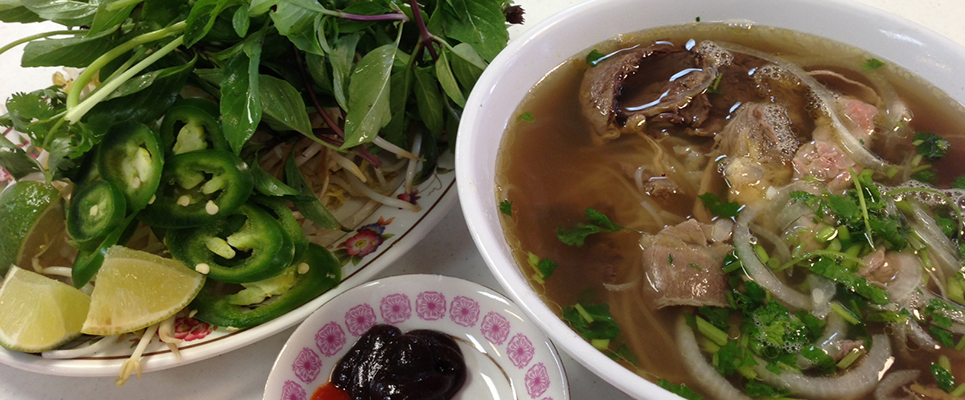
Fresh accompaniments are essential because they give the soup contrast. Thai basil, bean sprouts, shredded banana blossom, cabbage, mint, cilantro, and herbs may be served separately, depending on the restaurant. Add a modest handful first so the greens soften slightly while retaining some freshness.
Bean sprouts contribute crunch, while herbs bring a cool, fragrant note against the spicy broth. Banana blossom and shredded cabbage can add a mild vegetal flavor and a pleasant crispness. Tear larger herbs into smaller pieces so they are easier to gather with noodles and meat.
Lime is best added after tasting the broth. A squeeze can sharpen the flavors and make the soup feel lighter, but too much citrus can hide the lemongrass and fermented notes. Add a wedge, stir, and taste again.
| Component | What It Adds | How To Use It |
|---|---|---|
| Rice vermicelli | Chewy texture and substance | Loosen before eating |
| Beef or pork toppings | Savory richness | Combine with noodles in each bite |
| Lemongrass broth | Citrus-like aroma | Taste before seasoning |
| Fresh herbs | Fragrance and freshness | Add in small handfuls |
| Bean sprouts | Crunch and lightness | Add early or as you eat |
| Lime | Bright acidity | Squeeze gradually |
| Chili sauce or fresh chili | Extra heat | Add by the spoonful or slice |
Balance Heat Without Losing Flavor
Spicy food can become less enjoyable when the heat overwhelms every other ingredient. Instead of immediately adding chili oil or sliced peppers, taste the soup as served. Bun bo Hue often has a gentle warmth already present in the broth.
For more heat, add chili in small amounts and stir thoroughly. Chili paste can bring both spice and sweetness, while fresh sliced chili creates a sharper, more direct burn. Chili oil may add richness as well as heat, so use it carefully if the broth already feels oily.
Lime, herbs, and bean sprouts can refresh your palate between bites, but they do not erase the spice. Drinking water may spread the sensation rather than relieve it. Unsweetened tea or a cool Vietnamese drink can be a better companion, while a smoothie offers a sweeter contrast after the meal.
Build Each Bite With Intention
A satisfying bite usually includes a little of everything: several noodles, a piece of beef or pork, a few herbs, and enough broth to connect the flavors. Chopsticks are useful for lifting noodles, while a soup spoon catches the broth and smaller ingredients underneath.
Avoid piling the entire bowl with herbs at once. Adding ingredients in stages lets the meal evolve. The first portion can highlight the original broth, the next can bring in lime and greens, and the final portion can be hotter and more aromatic.
Pork hock or other larger pieces may require a fork, spoon, or careful use of chopsticks. Take smaller bites and allow the meat to cool slightly. The soup is meant to be eaten slowly enough to notice the changing textures.
Pair The Bowl With The Right Sides
A light appetizer can make a good companion to bun bo Hue, especially if you want something crisp before the spicy soup. Fresh rolls, fried snacks, or a small vegetable-based dish can add texture without competing with the broth.
Because the noodle soup is already substantial, choose sides selectively. A large fried dish may make the meal feel overly rich, while fresh vegetables or a modest appetizer can provide balance. If you are sharing, order one side for the table rather than several heavy items.
At Pho Hong, diners can build a Vietnamese meal around noodle soups, vermicelli bowls, rice plates, stir-fried noodles, appetizers, drinks, and smoothies. The restaurant offers dine-in service and delivery during designated hours, making it practical to enjoy a bowl in the dining room or order for home when available.
Make Your Next Bowl More Enjoyable
- Taste the broth before adding lime, chili, or sauce.
- Loosen the noodles so broth reaches every strand.
- Add herbs and sprouts in small portions for changing texture.
- Combine noodles, meat, greens, and broth in each bite.
- Eat slowly and use a cool drink to balance the spice.
Bun bo Hue rewards curiosity. Its heat is only one part of the dish; the real appeal comes from the interaction between lemongrass, fermented savoriness, tender meat, chewy noodles, herbs, and bright lime. Visit Pho Hong at 2521 Rutland Drive in Austin to try this distinctive Vietnamese soup alongside other familiar favorites, and check the restaurant’s current hours and menu before planning your meal.