From Hanoi Kitchens To Austin Bowls
The history of pho from Hanoi to Austin follows a path shaped by migration, local ingredients, family traditions, and changing restaurant culture. What began as a northern Vietnamese noodle soup became one of the world’s most recognizable comfort foods while retaining its connection to Vietnamese identity.
At Pho Hong, located at 2521 Rutland Drive in Austin, a bowl of beef pho carries that long story into a neighborhood setting. The restaurant serves traditional Vietnamese favorites alongside vermicelli bowls, rice plates, stir-fried noodles, appetizers, drinks, and smoothies.
Pho is often described simply as noodles, broth, and meat, yet its character comes from careful balance. Aromatic spices, rice noodles, herbs, and a slowly developed stock create a meal that can be both deeply familiar and distinctly regional.
Roots In Northern Vietnam
Pho appeared in northern Vietnam in the early twentieth century, with Nam Định and Hanoi frequently associated with its development. Its exact origin remains debated, but food historians generally connect it to a period when beef became more available under French colonial rule. Vietnamese cooks combined local rice noodles and aromatic ingredients with a style of beef broth that reflected changing urban food habits.
Before pho became a national symbol, it was closely linked to street vendors and working neighborhoods. Portable charcoal stoves, simmering stockpots, and stacks of fresh noodles allowed vendors to serve an affordable meal from early morning through the evening. Hanoi’s cooler climate also suited a hot, fragrant broth.
The name “pho” may be related to “phở,” though explanations of the word’s origin differ. Some theories point to Vietnamese pronunciation of a French beef dish, while others emphasize older regional noodle traditions. Regardless of the linguistic debate, the dish developed through exchange rather than a single invention.
Hanoi’s Clear, Focused Bowl
Northern pho is known for restraint. Hanoi-style phở bò commonly features a clear broth, flat rice noodles, sliced beef, and a modest selection of garnishes. Charred onion and ginger, star anise, cinnamon, cloves, and other spices build fragrance without overpowering the beef.
The northern approach usually keeps herbs, bean sprouts, and sauces separate or limited. This allows diners to taste the broth as the cook intended. Thinly sliced rare beef may cook gently in the hot liquid, while brisket, tendon, tripe, or meatballs offer different textures.
That focused style helped establish pho as a dish where technique matters. A stock can require hours of simmering, careful skimming, and measured seasoning. The result should taste clean and savory rather than heavy, sweet, or dominated by spice.
How Pho Traveled South
The partition of Vietnam in 1954 encouraged movement between the North and South. As northern families relocated, they brought their recipes and food businesses with them. In Saigon, pho adapted to a warmer climate, different produce, and a dining culture that welcomed a broader range of fresh garnishes.
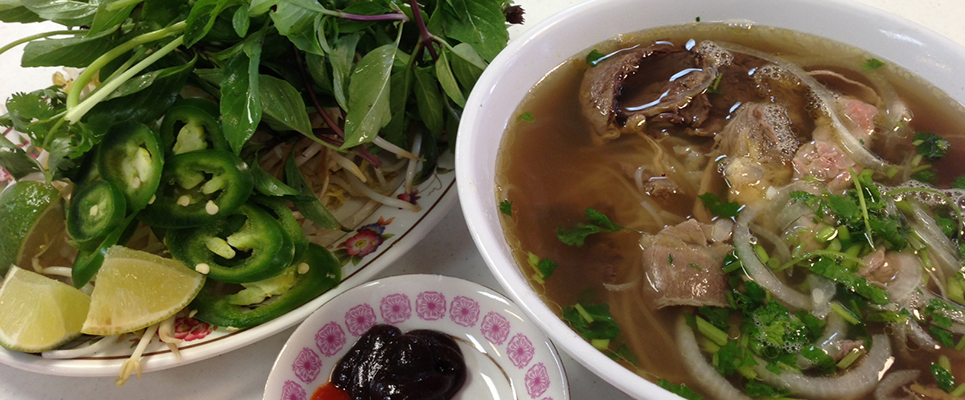
Southern pho often arrives with bean sprouts, Thai basil, lime, sliced chilies, sawtooth herb, and sauces such as hoisin or chili sauce. The broth may taste sweeter and the presentation more abundant than the northern version. These differences are not rigid rules; individual cooks and regions have always shaped pho in their own ways.
After 1975, Vietnamese refugees carried pho to North America, Europe, and Australia. Family restaurants became gathering places where language, memory, and food could remain connected. In each new city, cooks adjusted to available beef cuts, customer expectations, restaurant regulations, and local supply chains.
| Feature | Northern Style | Southern Style | Austin Restaurant Setting |
|---|---|---|---|
| Broth profile | Clear, savory, restrained | Often fuller and slightly sweeter | May balance traditional flavor with local preferences |
| Garnishes | Served sparingly | Herbs, sprouts, lime, and chilies are generous | Diners can customize each bowl |
| Typical setting | Street stalls and small shops | Busy noodle houses and family restaurants | Casual dine-in and designated delivery service |
| Regional influence | Hanoi and northern Vietnam | Saigon and southern Vietnam | Vietnamese tradition within a Texas food scene |
Pho In Austin’s Vietnamese Community
Austin’s growth has created room for Vietnamese restaurants that serve both longtime residents and diners discovering the cuisine for the first time. Pho fits naturally into the city’s casual dining culture: it is warming in cooler weather, refreshing when paired with herbs and lime, and substantial enough for lunch or dinner.
At Pho Hong, the menu places beef pho alongside other familiar Vietnamese dishes. Vermicelli bowls offer a lighter combination of noodles, vegetables, and toppings, while rice plates and stir-fried noodles provide hearty alternatives. Appetizers, smoothies, and drinks make it easier for a table to explore more than one part of the menu.
Pho also belongs to a larger family of Vietnamese noodle soups. Diners interested in regional contrasts can explore bun bo Hue’s spicy character, a central Vietnamese specialty with a more assertive chile and lemongrass profile. Comparing the two dishes reveals how geography influences broth, spice, noodles, and garnishes.
Reading A Bowl Of Pho
A good pho experience begins with the aroma. Before adding anything, pause over the broth and notice the ginger, onion, warm spices, and beef. This first taste shows whether the stock is delicate, rich, sweet, or intensely savory.
Rice noodles should be soft but pleasantly springy. Beef cuts contribute different qualities: rare slices are tender and delicate, brisket is richer, tendon is gelatinous, and meatballs add a firm bite. The combination gives the bowl depth without requiring elaborate plating.
Garnishes let each diner adjust the meal. Add herbs for freshness, lime for acidity, and chilies for heat. Bean sprouts provide crunch, while hoisin or chili sauce can add sweetness and spice. Adding a little at a time preserves the broth’s original flavor and makes the meal more interactive.
Making Pho Part Of An Austin Meal
Pho Hong operates seven days a week at 2521 Rutland Drive, giving Austin diners a convenient place to enjoy Vietnamese food throughout the week. Dine-in service suits a relaxed meal with friends or family, while delivery is available during designated hours for those who prefer to eat at home or at work.
The restaurant’s broader menu reflects how Vietnamese dining works in everyday life. One person may choose a steaming bowl of beef pho, another a vermicelli bowl, and someone else a rice plate or stir-fried noodles. Sharing appetizers and ordering smoothies or drinks can turn a quick meal into a more varied experience.
For the best visit, review the current hours, menu categories, location details, and any available coupon information on the restaurant’s website. Those details can help with planning, especially when ordering delivery or arranging a group meal.
Simple Ways To Explore The Menu
Pho offers several paths into Vietnamese food, whether you are familiar with the cuisine or trying it for the first time.
- Start with beef pho to experience the restaurant’s broth and noodle foundation.
- Add lime, herbs, sprouts, and chili gradually instead of mixing everything at once.
- Try a vermicelli bowl or rice plate when you want a different texture and presentation.
- Share an appetizer and compare the flavors with a friend or family member.
- Consider delivery during the restaurant’s designated delivery hours for a convenient meal at home.
The journey from Hanoi’s early noodle stalls to Austin’s Vietnamese restaurants shows how food can travel without losing its roots. Pho changes slightly from place to place, yet its essential appeal remains: fragrant broth, tender noodles, satisfying toppings, and a meal built for comfort.
Visit Pho Hong at 2521 Rutland Drive in Austin to taste that continuing story for yourself. Choose a classic bowl of beef pho, explore another Vietnamese specialty, or order a selection of dishes for the table through dine-in or available delivery service.