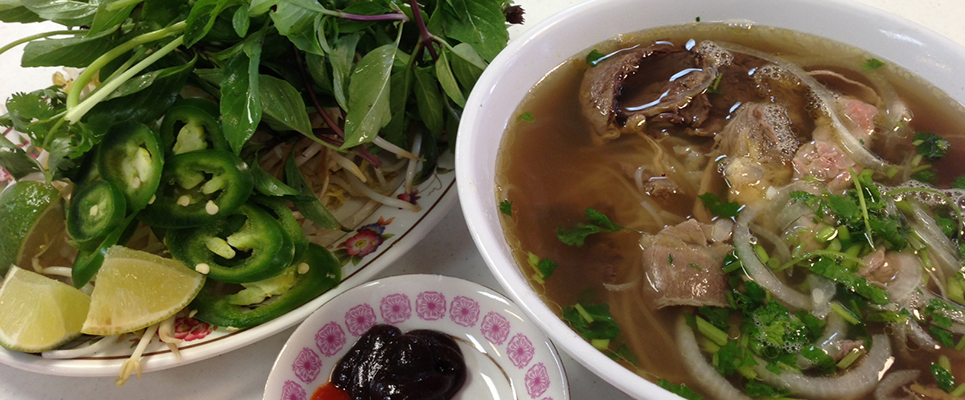
How Beef Brisket Delivers Pho's Signature Clean Finish
There's a moment when you lift a spoonful of pho, breathe in the steam, and notice the broth is deeply meaty and crystal-clear at once. That balance isn't accidental, and it doesn't come from the same beef cut that works for a steak or stir-fry. The clean, savory finish that defines a great bowl traces back to a specific part of the cow, simmered low and slow until every strand of connective tissue has given up its flavour.
For anyone curious about what separates an average broth from one that keeps you coming back, the answer lives in the brisket. Combined with charred onions, ginger, star anise and a patient flame, this single cut produces the clarity, body and gentle sweetness that make pho feel restorative rather than heavy. It is the cut most often used in Hanoi, and the same cut that Vietnamese-Australian chefs from Cabramatta to Footscray rely on for their best-selling bowls.
The Cut That Does the Heavy Lifting
Brisket comes from the lower chest of the animal, a hardworking muscle loaded with connective tissue and just enough intramuscular fat to keep the broth rich without turning greasy. When simmered for hours, the collagen in that tissue breaks down into gelatin, which gives the liquid a soft, silky body that clings to the noodles. The fat renders slowly and floats to the surface, where it can be skimmed away to leave a broth that looks golden and bright rather than murky.
Lean cuts like sirloin or round produce a thinner broth that lacks the rounded mouthfeel Vietnamese diners expect. The brisket's mix of muscle, fat and silver skin is what allows the long simmer to coax out layers of flavour while preserving that signature clean finish. It is also forgiving — extra time on the stove deepens the taste, which is why brisket has stayed at the centre of pho recipes for generations.
Why Shank and Bones Matter Too
While brisket is the headline, the supporting players carry real weight. Beef shank, with its rich marrow centre, releases a deep, almost mineral undertone during the simmer. The marrow melts into the liquid and adds an umami depth the brisket alone cannot deliver. Marrow bones, often roasted briefly before going into the pot, contribute the same quality while helping the broth develop a slightly darker hue.
Together, these elements create a full-flavoured but clean profile. The gelatin from the shank combines with the brisket's collagen, and the result is a broth that tastes layered yet never heavy. Skim the surface regularly, simmer at a bare tremble rather than a rolling boil, and the finished liquid will be clear enough to read through, yet layered enough to taste like pho.
Skimming, Temperature and the Clean Finish
The clean finish is as much about technique as the cut. When the broth boils too hard, proteins and fats emulsify and create a cloudy, chalky texture. Keeping the heat low lets impurities rise to the top in a thin foam, which can be lifted off with a fine mesh strainer or flat spoon. Many home cooks in Sydney and Brisbane treat this skimming as a quiet ritual, with the first pass usually within twenty minutes of the pot coming up to temperature.
Temperature matters for another reason. A gentle simmer keeps the fat from breaking into the broth, which is what causes the greasy film some restaurants serve. A controlled flame also protects the aromatics — charred ginger, star anise, cinnamon, cloves — so their oils infuse slowly rather than burning off. The result is a broth that smells fragrant, looks translucent and finishes with a quiet savouriness rather than a sharp meaty punch.
| Cut | Role in the Broth | Simmer Time | Contribution to Finish |
|---|---|---|---|
| Beef brisket | Main protein, source of collagen | 2–3 hours | Silky body, gentle sweetness |
| Beef shank | Marrow and connective tissue | 2–3 hours | Deep umami, mineral undertone |
| Marrow bones | Bone base, roasted first | 3+ hours | Darker colour, full-flavoured foundation |
| Tendon | Optional, collagen-rich | 2–4 hours | Extra gelatin, glossy texture |
| Fatty cuts (rib, navel) | Optional, for richness | 1–2 hours | Rich mouthfeel, risk of greasy broth |
Australia's Grass-Fed Advantage
Australian beef has built a reputation around grass-fed cattle, and that style suits pho particularly well. Grass-fed brisket tends to carry a slightly cleaner, brighter beef flavour than grain-fed, which can lean buttery and heavy. When you combine that grass-fed profile with the long, gentle simmer pho demands, the broth develops a savoury finish that feels light on the palate rather than dense.
You can see this play out in the Vietnamese-Australian communities of Melbourne's Richmond and Footscray, where pho shops source brisket from local butchers working with producers in Victoria and New South Wales. Many have refined their broths for two decades, crediting the consistent quality of Australian grass-fed beef. Home cooks shopping at Coles or Woolworths can choose grass-fed, untrimmed brisket as the closest match to what restaurants use.
Recreating the Broth at Home
A clear, savoury pho broth is achievable in any Australian kitchen with a stockpot, a few essentials and patience. Start with about 1.5 kilograms of brisket, a kilogram of beef shank and a couple of roasted marrow bones. Char a halved onion and a knob of ginger over a gas flame until blackened, then add them to the pot along with star anise, cinnamon, cloves and a small pinch of rock sugar.
Fill the pot with cold water, bring it to a bare tremble, and skim aggressively for the first hour. After the second hour, taste — if the beef flavour feels muted, let it go another thirty minutes. Strain through a fine sieve, season with fish sauce, and serve over rice noodles with sliced brisket, herbs and lime. Ladling at the table shapes the experience, and the same discipline that guides a careful sushi service applies just as much to a bowl of pho. For a closer look at how visual rhythm shapes a dish, the art of plating sushi explores similar ideas.
Pairing the Broth with the Right Plate
A pho bowl finished with brisket has a delicate sweetness that pairs well with bright, crunchy sides. Pickled bean sprouts, fresh Thai basil and sliced chilli let diners adjust each spoonful, while a side of how to make Vietnamese banana flower salad adds a peppery, slightly nutty contrast that cuts through the broth's richness. A plate of spring rolls or grilled lemongrass beef skewers rounds out the meal without crowding the bowl.
Presentation plays a quiet role here too. Arranging the rare brisket slices in a fan shape, placing the herbs in a small mound and ladling the broth at the table all make the experience feel considered. Those small moves turn a humble noodle soup into the kind of meal that stays in memory long after the bowl is empty, and they echo the visual discipline that careful cooks bring to every plate they serve.
Recommendations for a Better Bowl
- Choose brisket with a thick fat cap; trim only after simmering so the flavour stays intact.
- Always char the onion and ginger before they go into the pot to add the slight smokiness that defines pho.
- Keep the simmer at a bare tremble, never a rolling boil, to preserve clarity.
- Skim every fifteen minutes during the first hour, and again whenever foam rises later in the cook.
- Rest the broth for ten minutes off the heat before serving, so the fat settles and the aromatics mellow.