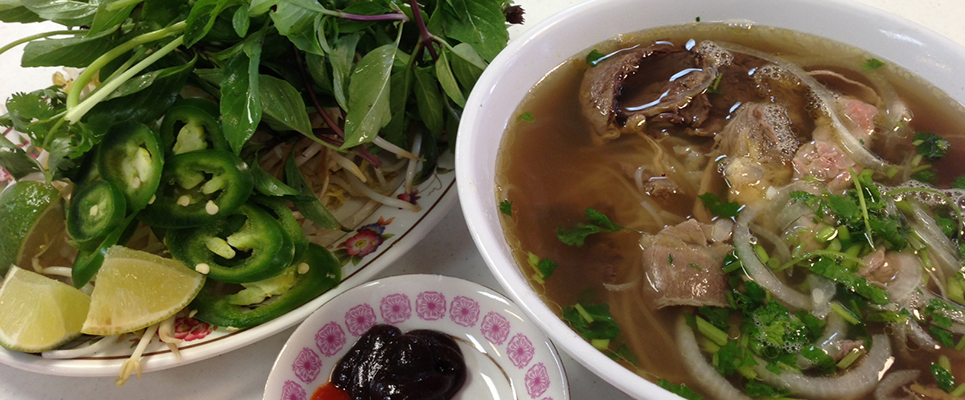
Why brisket and flank are cooked separately before serving
A bowl of pho looks deceptively simple. Clear broth, rice noodles, a few slices of beef, herbs on the side. But the architecture behind that bowl reflects decades of refinement, particularly in how the meat is handled.
Walk into a Vietnamese eatery in Cabramatta or Richmond, and you'll see the same care. Pho Hong, a family-run spot in Austin, approaches brisket and flank with the same respect that chefs in Sydney's western suburbs show when ladling broth for the lunch crowd. The question of why these two cuts are kept separate from the simmering pot is worth unpacking.
Australian diners might recognise the principle from a backyard barbecue. You wouldn't throw a brisket point and a flank steak on the same grill setting at the same time. The muscle fibres, the fat ratio, and the ideal internal temperature differ too much. Pho follows a similar logic, but in liquid form.
This piece walks through the anatomical differences, the cooking science, and the sensory payoff of serving brisket and flank on their own terms. Along the way, we'll touch on how this philosophy shapes portion choices and delivery trends.
The anatomy of brisket and flank
Brisket comes from the lower chest of the cow, a hard-working muscle loaded with connective tissue. Flank sits beneath the loin, a long flat muscle that gets exercise but has a finer grain. In Australian butchery terms, these are the cuts you'd see hung in the window of a good suburban butcher, each with a distinct role in the kitchen.
When you slice into a properly cooked brisket, the muscle separates along visible layers of fat. Flank, by contrast, shows long parallel fibres that benefit from being cut thin against the grain. Treating them the same way in a pot of simmering broth would compromise both.
Heat tolerance and timing
Brisket tolerates hours of gentle heat. Collagen breaks down into gelatin, giving the broth a richer mouthfeel and turning the meat fork-tender. Flank does not behave this way. Extended heat turns flank fibrous and chalky, the way a steak left too long on the plate loses its appeal.
Pho kitchens account for this by cooking brisket directly in the broth for many hours, then slicing it thin to order. Flank, by contrast, is often partially cooked in the broth and finished by the residual heat of the bowl, or served raw so the customer can dip and cook it at the table. The result is two textures: one melting, one springy.
Fat, flavour, and broth clarity
A clear pho broth is a point of pride. Fat should sit as a thin amber layer on top, easy to skim, easy to stir in. Brisket contributes to that signature sheen because of its marbling. Flank contributes very little fat, which is why it doesn't cloud the liquid.
This matters for delivery, too. A bowl travelling from kitchen to kerb in Brisbane heat needs to arrive with the broth looking clean, not greasy. Separating the cooking of these cuts helps maintain that clarity. Delivery platforms and food trend accounts like TikTok delivered have amplified how visual presentation influences ordering choices, and broth clarity remains a key visual anchor for any bowl of pho.
Texture contrast as a feature
A good bowl offers contrast. The brisket provides that slow-cooked, almost silky bite. The flank provides a slightly chewy, beefier snap. Eating them together, or alternating between them, creates a rhythm that keeps the spoon interesting. Without that contrast, the meat component becomes monotonous.
This is similar to how a Vietnamese cold cut platter in Melbourne's Victoria Street might include both pork loaf and Vietnamese ham, each contributing a different texture and salinity. The principle of variety within a single dish travels across cuisines.
| Feature | Brisket | Flank |
|---|---|---|
| Muscle location | Lower chest, high connective tissue | Beneath the loin, finer grain |
| Fat content | High marbling, contributes to broth sheen | Lean, minimal fat |
| Cooking time | Several hours in simmering broth | Brief dip or raw at the table |
| Texture in finished bowl | Silky, tender, almost gelatinous | Slightly chewy, beefier bite |
| Role in broth | Cooked in the pot, flavours the liquid | Added at service, keeps broth clear |
Kitchen workflow and quality control
Cooking these cuts separately also gives the kitchen better control. The brisket pot can be tended over many hours, seasoned and skimmed, without disturbing the delicate balance of herbs and char that defines the broth. The flank can be sliced to order, kept cold, and plated within seconds of the bowl being assembled.
For a delivery-focused operation, this separation is even more important. The brisket holds heat and stays tender during transit. The flank can be packed separately and added just before sealing, so it doesn't overcook. The logic behind bowl sizing shows how the same attention to detail shapes other parts of the menu.
Choosing your ideal bowl
Knowing that brisket and flank are treated differently changes how you approach the bowl. You can let the brisket sit and absorb the broth, or give the flank a quick dip so it cooks at the table. The separation is what gives you that flexibility, and it shapes what to ask for when ordering.
In a Sydney summer, when the temperature pushes past 35 degrees, a lighter approach with more flank might feel right. In a Melbourne winter, a heavier bowl with more brisket and slow-cooked richness often hits the spot. A few points can help you navigate the choice.
- Decide whether you want a slow-cooked richness (more brisket) or a cleaner, beef-forward bite (more flank).
- Consider the weather: in humid Brisbane summers, lean cuts feel lighter; in chilly Adelaide mornings, slow-cooked cuts are more satisfying.
- Ask the kitchen how the broth is finished that day; some batches lean more towards the brisket side, others towards the flank.
- If you're ordering delivery, request the brisket and flank to be packed separately so textures stay distinct.
- Pair your choice with the right herb load: Thai basil and sawtooth herb complement richer brisket, while bean sprouts and lime brighten leaner flank.
- Save room for the broth itself; the cooking method of the meat shapes how the broth tastes, so sip it both before and after the meat.