Why Tight Spring Rolls Stay Crisp at Pho Hong
A soggy spring roll is one of the saddest things in a takeaway bag. You bite in expecting crunch, and you get a damp, wilted wrapper that clings to the filling. At Pho Hong in Austin, we have spent years figuring out how to keep that wrapper taut and dry, from the moment the roll leaves the kitchen to the moment it lands on a plate in Brisbane, Melbourne, or anywhere in between where our customers might be enjoying a taste of Vietnam.
The trick is more straightforward than most people assume, and it has very little to do with fancy ingredients. It comes down to rolling pressure, wrapper hydration, and the timing between preparation and serving. Each of these plays a role in whether your chả giò arrives as a tight little parcel or a sad, limp tube.
The Science of Soggy Spring Rolls
When a rice paper wrapper sits too long against wet filling, moisture migrates outward. The water in the pork, vermicelli, and julienned vegetables slowly softens the sheet from the inside. The same process happens with a wheat-based wrapper, except it goes through a different pathway: steam condenses inside, oil seeps through tiny gaps, and the pastry loses its flake.
Tight rolling reduces the air pockets where this moisture can pool. Fewer gaps means less steam building up during the brief fry, and a more uniform surface for oil to crisp. Think of it like packing a suitcase: the tighter the roll, the less your clothes shift around, and the easier it is to keep everything in place during the journey from the kitchen to the table.
The wrapper also stretches more evenly when it is pulled snug. Loose rolling creates slack, and slack creates folds where oil can collect and turn heavy. A properly tight roll has a smooth drum-like surface that fries into a uniform golden shell.
Tight Rolling in the Texas Climate
Austin's summer humidity can hit ninety percent on a sticky August arvo, and that same kind of dampness sneaks into a kitchen. Wrappers absorb moisture from the air as well as from the filling, which is why the team at Pho Hong keeps the rolling station as dry as a Perth breeze. Every minute a wrapper sits exposed, it soaks up a little more water, and that water has to go somewhere.
Australian customers who order Vietnamese takeaway back home notice the same thing. A roll that travels across town in a paper bag can soften if the kitchen cut corners during prep. Pho Hong treats every roll as if it is going on a long road trip through the Outback, even when the customer is only ten minutes away.
The kitchen keeps the wrappers covered with a barely damp cloth until they are needed, then rolls quickly and fries straight away. This short window between rolling and frying is one of the reasons a Pho Hong chả giò still snaps when you tap it on the bench, even on a humid day.
The Hand-Rolling Technique
Every spring roll at Pho Hong is rolled by hand. There is no machine pressing them into shape, no industrial cylinder forcing uniformity. A cook lays the wrapper flat, places the filling in the lower third, tucks the sides inward like folding a burrito, and then rolls forward with firm, even pressure.
That pressure is everything. Too gentle, and you leave air pockets that fry into soft spots. Too rough, and the wrapper tears before it reaches the oil. The cooks learn to feel the right tension after a few hundred rolls, much like a barista learns to tamp espresso or a tradie learns to swing a hammer.
Australian customers who grew up watching family members roll chả giò at home often comment that the Pho Hong version looks just like the ones from their childhood kitchens. That resemblance is no accident. The technique is the same one taught across Vietnamese households for generations.
Rice Paper Wrapping Done Right
Pho Hong uses traditional rice paper for its chả giò, dipped briefly in warm water to soften, then laid out on a clean board. The wetting step is short: just enough to make the sheet pliable, not enough to make it floppy. A wrapper that is too wet already starts the sogginess clock before the filling goes in.
Some places rush the wetting step and leave the wrapper sitting in water for thirty seconds or more. That extra time seems harmless, but it leaves the sheet so saturated that no amount of rolling can save it. By the time the roll hits the oil, the wrapper is already waterlogged and waiting to fall apart.
The rice paper used at Pho Hong is the same kind you can find in any Asian grocer in Cabramatta or Footscray, and it behaves the same way in any kitchen. The difference is in how it is handled between the bowl of warm water and the roll itself.
Fresh Filling and Clean Crunch
The filling inside a spring roll affects crispiness as much as the wrapper. Pho Hong seasons the pork mixture the morning of service, drains the vermicelli properly, and keeps the bean thread noodles from dripping. Any excess water in the filling is water that ends up weakening the wrapper from the inside.
Vegetables are julienned fresh each day, not pre-cut and stored in containers. Carrots, cabbage, and jicama hold moisture differently once they have been sitting in a cold room overnight. Fresh-cut veg fries lighter and releases less steam during cooking, which keeps the wrapper drier overall.
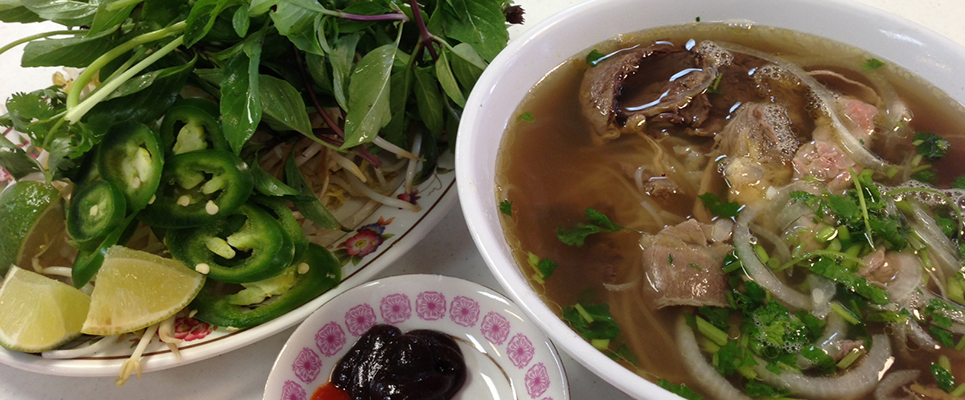
When customers pair the rolls with a rice plate or a steaming bowl of phở, the freshness of the filling matters even more. A clean, bright crunch beside a rich noodle broth is what makes the meal feel balanced, the way a cold beer feels right alongside a snag on the barbie.
Frying at the Right Moment
A spring roll that sits waiting to be fried is already losing the battle. The longer it waits, the more the wrapper absorbs moisture from the filling, and the less likely it is to crisp properly when it finally hits the oil. Pho Hong fries in small batches, three or four rolls at a time, so each one spends only seconds between the rolling board and the bubbling oil.
The oil temperature sits at a steady one hundred seventy-five degrees Celsius. Too cool, and the roll soaks up oil before the outside crisps. Too hot, and the wrapper browns before the filling heats through, leaving you with a burnt shell around a cold centre. The steady temperature is what gives Pho Hong rolls their even golden colour and that signature snap.
This is also why the dine-in experience differs from a typical takeaway order. The roll leaves the fryer, drains for a moment on a rack, then goes straight to the table. Customers who order rice plates often say the rolls arrive so fresh they can hear them crackle when the plate hits the table.
How Pho Hong Spring Rolls Compare
Different kitchens treat spring rolls in different ways. Here is a quick look at common approaches and what each one means for crispiness.
| Approach | Wrapper Prep | Rolling Tightness | Frying Method | Typical Result |
|---|---|---|---|---|
| Pho Hong kitchen | Quick dip, covered | Firm, even pressure | Small batches, steady heat | Crisp shell, no sogginess |
| Typical takeaway shop | Long soak | Loose, fast | Large batches, variable heat | Soft spots, limp wrapper |
| Frozen supermarket roll | Pre-blanched at factory | Machine-pressed unevenly | Reheated in oven | Chewy, sometimes gummy |
| Homemade family-style | Dip until floppy | Variable | Pan-fried in shallow oil | Inconsistent, often good |
| Hotel buffet version | Pre-made hours ahead | Tight but dry | Held under heat lamp | Wrinkled, oil-logged |
Each approach has its place. A supermarket roll suits a weeknight dinner when nobody wants to cook. A family-style roll carries nostalgia and a tradie's lunchbox memory. A Pho Hong roll, however, is built for the moment you want that specific snap and clean flavour, the kind that pairs with a cold drink on a hot afternoon or sits beside a steaming bowl of noodles on a rainy evening.
The next time you order chả giò at Pho Hong, listen for the crackle when the plate lands. That sound is the payoff for tight rolling, dry handling, and small-batch frying, the kind of detail that turns a simple snack into the best part of the meal.