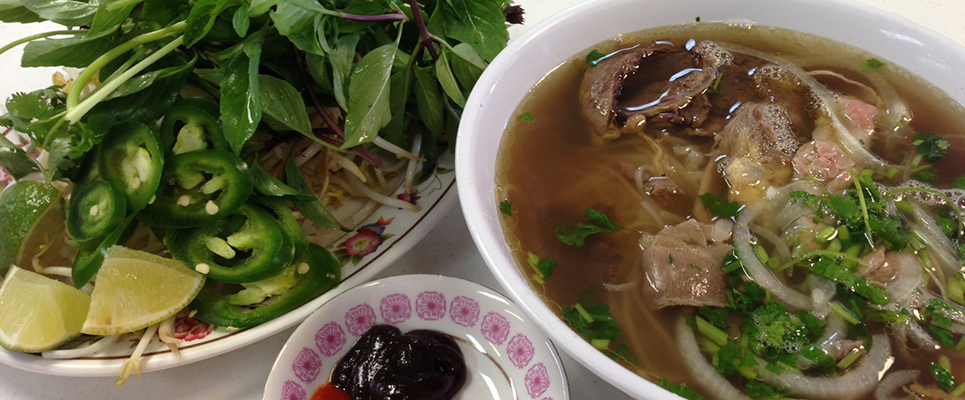
Lemongrass gives our stir-fried beef aromatic depth
At Pho Hong on Austin’s Rutland Drive, the menu is busy with strong flavours: pho, vermicelli bowls, rice plates and stir-fried noodles all need their own identity. Our beef stir-fry gets its character before the pan is heated. Lemongrass is worked into the marinade so its floral-citrus aroma becomes part of the meat, not a garnish added after cooking.
The technique creates a clear aromatic thread through the finished dish. It also offers Australian diners a familiar connection, since lemongrass is already common in Vietnamese, Thai and Indonesian kitchens. At the same time, the wok adds the char, heat and quick movement that turn a well-seasoned ingredient into a satisfying meal.
Why lemongrass belongs in the marinade
When we marinate our beef with lemongrass before stir-frying, we are seasoning the meat at the point where the wok can amplify it. Bruising the stalk breaks down its fibres and releases aromatic oils, while finely chopping it allows those flavours to spread through the marinade instead of leaving stringy pieces in the finished dish.
Fresh lemongrass brings lemon, grassy and floral notes with a subtle ginger-like warmth. Those flavours work well against rich beef because they cut through the meat’s richness without needing to overpower it. The marinade also distributes seasoning evenly across the surface, giving each piece of beef a more coherent flavour.
The herb is meant to support the wider dish rather than dominate it. Garlic, chilli and savoury sauces can provide stronger notes, while lemongrass supplies the fragrant lift between them. A balanced amount leaves the beef recognisable and gives the wok sauce an especially clean, aromatic finish.
What the wok does with the seasoned beef
Before the beef enters the wok, excess marinade is drained away. A thin coating is useful, but a pool of liquid would lower the pan temperature and slow the searing process. Draining helps the surface brown properly while retaining the seasoning that has already soaked into the meat.
High heat then creates the browning and roasted flavours associated with a good stir-fry. The beef develops crisp edges and a deeply savoury centre, while the lemongrass aroma becomes more rounded and less raw. Because it was introduced before cooking, the herb works in harmony with the seared juices and sauce.
Timing is equally important. Lemongrass added only at the end can taste fresh, but pre-marinating allows its character to settle into the beef. The result is a background aroma that remains present after the first bite without making every mouthful taste identical.
The technique in an Australian food context
For Australian diners, lemongrass is already part of everyday Asian-food vocabulary. Vietnamese communities have deep roots in Sydney’s Cabramatta and Melbourne’s Footscray, where restaurants regularly feature lemongrass, basil, mint and rice noodles. Fresh lemongrass is also sold through the Asian produce aisles of Coles and Woolworths, although bunch sizes and availability vary between stores.
Casual Australian speech often uses phrases such as “grab a feed” for an informal meal, while “takeaway” covers food collected for eating at home or elsewhere. The local market is also familiar with app-based delivery through platforms such as Uber Eats and DoorDash, alongside restaurant-run pickup services. Those habits make checking service windows before ordering a familiar consideration for Australian visitors dining in Austin.
Hot Australian summers make fresh, bright flavours especially appealing, and Pho Hong’s drinks and smoothies provide a cooling counterpoint to stir-fried spice. Regional comparisons can deepen that appreciation: a Bali food guide offers a useful counterpoint for seeing how lemongrass travels beyond Vietnamese cooking.
Flavour and practical notes for your order
Pho Hong is located at 2521 Rutland Drive in Austin and serves pho, vermicelli bowls, rice plates, stir-fried noodles, appetizers, drinks and smoothies. The restaurant offers dine-in service and delivery during designated hours, operating seven days a week. Current operating and delivery times should be checked before travelling.
Diners looking for a current promotion can consult Pho Hong coupons before heading to the restaurant, since availability and terms may change.
Flavour expectations:
- Lemongrass should appear as a floral, citrusy aroma rather than a raw grassy taste.
- The beef retains its savoury character, with char and sauce providing the strongest notes.
- Fresh chilli or other seasonings can complement the dish without defining its entire flavour.
Dining details:
- Dine-in service is available at 2521 Rutland Drive in Austin.
- Delivery runs during designated windows rather than continuously throughout the day.
- The restaurant operates seven days a week, making the current weekly hours important when planning a visit.
Comparing ways to use lemongrass
Lemongrass can be prepared in several ways, and each changes how prominently it appears. Fresh, finely chopped material gives a cleaner citrus aroma, while dried or ground versions deliver a more concentrated and earthy character.
The preparation also affects where the flavour sits in the dish. Lemongrass mixed into a marinade seasons the meat before heat is applied, whereas lemongrass added during cooking or at the table highlights its freshest aromatic notes. The best choice depends on whether the herb should provide depth or a bright finish.
| Approach | Main character | Effect on the beef | Best use |
|---|---|---|---|
| Fresh lemongrass in the marinade | Floral, citrusy and grassy | Builds aroma before searing | Beef stir-fries and grilled meats |
| Dried lemongrass in the marinade | Concentrated and slightly earthy | Adds depth with less preparation | Pantry-friendly stir-fries |
| Ground lemongrass | Strong and quickly released | Seasons the surface efficiently | Marinades, spice rubs and soups |
| Fresh lemongrass added at the end | Bright and highly aromatic | Preserves the top notes without deeply seasoning the centre | Finishing bowls, salads and soups |