Why a gluten-free rice paper choice matters on the spring roll menu
Walk past a busy Vietnamese eatery in Sydney's Cabramatta or Melbourne's Richmond on a Saturday arvo and you will see a familiar sight: families dipping translucent rolls into nuoc cham, sharing rice paper salads across plastic tables. Australia has one of the highest rates of medically diagnosed coeliac disease in the world, which is why phrases like "gluten-free friendly" show up on menus from Brisbane to Perth. For many Aussies who need to eat wheat-free, finding a safe option at a Vietnamese restaurant once meant skipping the spring rolls entirely and going straight for the pho.
At Pho Hong, the kitchen takes a different line. Rice paper has always been the traditional wrapper for fresh Vietnamese rolls, so keeping it on the menu and ensuring it stays truly gluten-free is simply a matter of preparation discipline. The decision to highlight this option reflects a broader shift in Australian dining, where labelled ingredients and allergen transparency have moved from niche concern to baseline expectation.
A coeliac-aware menu down under
Australia treats gluten-free labelling seriously through Food Standards Australia New Zealand, so any kitchen that claims a dish is safe must back it up with proper separation. Coeliac Australia estimates that roughly one in seventy Australians are diagnosed with the condition, and many more report non-coeliac gluten sensitivity. That figure alone shapes how restaurants format their menus in cities like Adelaide and Hobart as much as in the larger capitals.
Vietnamese food has a natural advantage here. The backbone of most dishes — rice noodles, rice paper, fish sauce, herbs — is inherently free from wheat, barley and rye. Other cuisines have had to work harder to meet similar demand; Moroccan cooks, for example, have put real effort into reimagining slow-cooked stews so they suit plant-based diners, with detailed guides to vegetarian tagines that still pull their weight on the menu. Vietnamese kitchens, by contrast, already speak the language of rice.
Keeping the kitchen free from cross-contact
Serving a gluten-free rice paper option is only half the job. A wrapper that started life gluten-free can pick up traces of soy sauce, hoisin or wheat noodles the moment it touches the wrong bench. The team at Pho Hong treats spring roll prep as a separate workflow: a dedicated board, clean hands, and a fryer that does not double for battered wheat dishes. Sauces are ladled from labelled containers rather than poured from shared jugs.
This kind of discipline matters more than the choice of wrapper itself. Many coeliacs in Canberra or on the Gold Coast will tell you they have been glutened by a "gluten-free" menu item because a spatula moved from one pan to another. Speaking openly with staff helps too. Asking how the rolls are rolled and what they are dipped in often gives a quicker, clearer answer than scanning a menu.
What rice paper brings that other wrappers cannot
The choice between rice paper and a wheat-based wrapper touches more than allergens alone. Texture, flavour and nutritional profile all shift depending on which one a kitchen uses. A quick look at how the two compare makes the difference obvious.
| Feature | Rice paper | Wheat-based wrapper |
|---|---|---|
| Main ingredient | Rice flour, water, salt | Wheat flour, sometimes egg |
| Gluten content | Naturally gluten-free | Contains gluten |
| Texture after dipping | Soft, slightly chewy, translucent | Soft, more elastic, opaque |
| Flavour profile | Neutral, lets fillings shine | Mildly bready, can mute herbs |
| Best for | Fresh rolls, light fillings | Fried rolls, heartier fillings |
| Allergen notes | Suitable for coeliac and wheat-sensitive diners | Off the menu for gluten-free guests |
Diners at Pho Hong often comment on how much brighter the herbs taste through a rice paper skin. Mint, coriander, Thai basil and perilla come through cleanly, without that faint floury backdrop that wheat wrappers can leave behind. The wrapper also rolls up thinner, which matters when a roll holds crisp lettuce, sliced pork and vermicelli together.
Pairing spring rolls with the rest of the menu
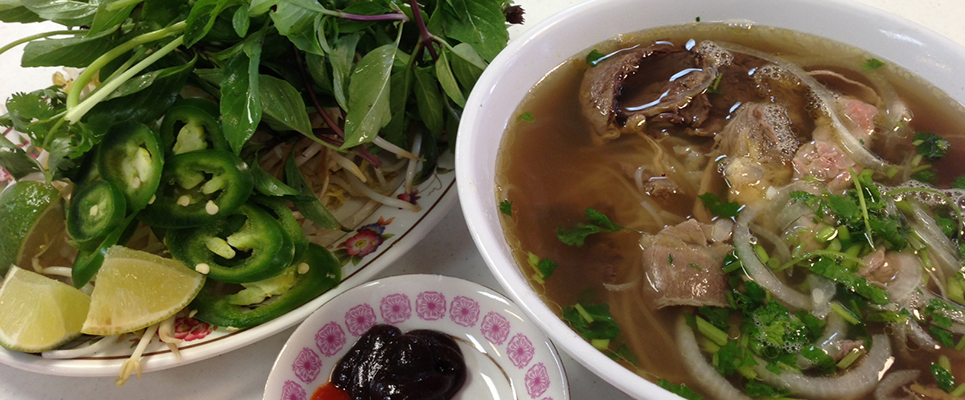
A plate of fresh rolls sits happily next to almost anything on the menu, but a few combinations tend to land best. The herb-forward sweetness of a rice paper roll balances well with a rich, beef-heavy pho, cutting through the broth with cool crunch. It pairs neatly with vermicelli bowls too, where grilled meat or tofu brings smoky depth that the rolls soften. Drinks work in as well — a Vietnamese iced coffee or a tropical smoothie can stand in for the usual beer pairing when diners want to keep things lighter.
For anyone planning a fuller meal, it helps to think about how each course builds on the next. The kitchen has pulled together a few ideas on pairing appetisers with mains, and the same logic applies whether the centrepiece is a steaming bowl of noodles or a stir-fried plate.
Eating in or ordering out
Pho Hong sits at 2521 Rutland Drive in Austin, Texas, and opens seven days a week for both dine-in and delivery during set hours. The full menu, opening times, the address and any active coupons are listed at phohong.net. Anyone curious about the broader cooking philosophy can browse the stories section for the same kind of detail covered above.
For readers who follow Vietnamese food from across the Pacific — perhaps because a beloved aunt in Footscray or Cabramatta set the standard decades ago — the takeaway is straightforward. Rice paper is the original spring roll wrapper, and treating it with the care that gluten-free kitchens demand keeps the dish as close to its roots as possible.