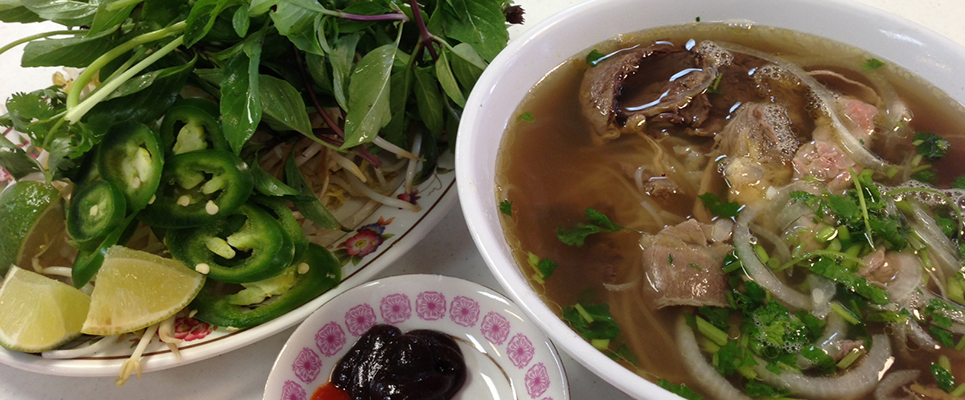
Why a Wedge of Lime and Sliced Jalapeño Belongs Beside Every Bowl of Pho
Every bowl of pho that leaves our kitchen at 2521 Rutland Drive carries a small plate of garnishes beside it. The plate is not an afterthought, and it is certainly not decoration. It is the final ingredient, the part of the meal that finishes itself in the customer's bowl. Most regulars grab the wedge and a fistful of sliced chilli without thinking, the way you might add salt to chips at a pub in Brunswick or twist the cap off a cold one at the end of a long arvo.
The reason is older than our restaurant, older than the suburb, and older than most of the diners who walk through our door. Lime and fresh chilli have sat beside pho for generations in Vietnam, and the habit travelled with the diaspora to Marrickville, to Footscray, to Springvale, and eventually to Austin. We keep the tradition because it works, and because a bowl finished at the table always tastes brighter than one finished in the kitchen.
A tradition older than the bowl
Pho began as a street food, sold from carts and small kitchens in northern Vietnam at the turn of the last century. The broth was rich and slow-simmered, but the carts were tiny, so the cook had to send the dish out almost bare. Fresh herbs, sliced chilli, and a wedge of citrus travelled with the bowl so the customer could adjust the flavour on the spot. That division of labour, cook in the kitchen and diner at the table, has stayed with pho ever since.
When the dish crossed oceans and arrived in places like Cabramatta in Sydney or the Victoria Street strip in Melbourne, the same small plate came with it. Vietnamese-Australian families opened shops, and the plate stayed on the table. The tradition is so woven into the everyday eating culture that many Australians now treat the squeeze-and-drop ritual as ordinary as adding sauce to a meat pie.
We follow the same rule at Pho Hong. The garnish plate is part of the recipe, not an extra. Removing it would be like serving a parma without the chips. Customers sometimes ask whether they have to use the lime and the chilli, and the honest answer is no, but the bowl will be missing the finishing note.
What lime actually does in a bowl of pho
The broth of a beef pho is built on charred ginger, star anise, cinnamon, and a long simmer of bones. That base is deep, fatty, and gently sweet. A squeeze of lime cuts through the richness and lifts the aromatics in a single stroke. The acid brightens the star anise, sharpens the beef, and keeps the broth from feeling heavy on the palate after the third or fourth spoonful.
It also helps with the noodles. Rice vermicelli carries a faint starchy note that softens the moment acid joins it. A light squeeze is usually plenty, because a heavy hand will push the broth toward sour, which is not where beef pho wants to live. We slice a small wedge rather than a half, so the customer controls the dose.
There is an everyday habit hiding in the garnish too. The Vietnamese table has paired lime with brothy soups for so long because the citrus helps cut richness and refreshes the appetite between bites. Diners in Brisbane and Adelaide have picked up the same rhythm, finishing a bowl with a final squeeze the way others might finish a meal with a strong coffee.
The honest heat of fresh jalapeño
Jalapeño sits beside the bowl for the same reason sriracha does, but it does the job differently. A bottled chilli sauce carries vinegar, sugar, and often garlic, which adds flavour along with heat. A fresh slice gives pure heat, a clean burn that hits the tongue and fades without leaving sweetness behind. That clean burn is what pho needs, because the broth already carries so many.
We slice the jalapeño thin, with the seeds left in for the regulars who want the full kick, and removed for anyone who wants a softer warmth. The plate arrives with a small handful, usually five or seven rounds, so the customer can drop as many as they like. It is the same logic behind a curry with the spice level chosen at the table, or a pizza with chilli flakes on the side. The kitchen sets the foundation, the customer sets the fire.
Heat also changes how the broth feels. Capsaicin opens the sinuses and clears the back of the throat, which makes every spoonful taste more aromatic. On a cold morning, or after a long shift in a chilly warehouse in Western Sydney, that little kick can be the difference between a quick lunch and a meal you remember.
How Aussies build their bowl
Walk into a Vietnamese shop anywhere from Marrickville to Footscray at lunchtime and you will see the same routine. Noodles in, herbs in, sauce in, squeeze, slice, stir, eat. The customisation is the meal. Australians love a feed they can finish themselves, and pho is one of the rare dishes that hands the final steps to the customer without losing quality.
The same instinct shows up in how locals order. Many of our regulars dial in through delivery apps and still ask for extra lime, extra jalapeño, and a side of basil. Even when the bowl travels twenty minutes in a bag, the garnish plate travels with it, because the ritual matters more than the route. The squeeze happens at the kitchen bench, at the office desk, or on the couch in front of the telly.
If you are new to pho, a fair dinkum starting point is a light squeeze of lime and two slices of jalapeño. Stir once, then taste. If the broth sings, leave it. If it feels flat, squeeze again. The bowl is yours to finish, and that is the whole point.
Garnishes that survive the trip home
Delivery has reshaped how every restaurant thinks about garnish. Herbs wilt, sauce leaks, and slices dry out if the trip is too long. The lime wedge is sturdy and travels well. Fresh jalapeño slices hold their heat for the fifteen or thirty minutes most orders spend in transit, especially when they sit on the plate rather than loose in the bag. Bean sprouts can soften, Thai basil can bruise, but the citrus and the chilli arrive ready to work.
That is why we send lime and jalapeño with every delivery bowl, and why we tuck the softer herbs into a separate container when the order is going far. The plate is built to survive the journey, the way a flat white at a Melbourne cafe is built to survive the walk to the tram. The way how delivery-only brands work has reshaped packaging choices across the industry is a reminder that garnish is part of the rethink, not a leftover from the kitchen.
For anyone picking up the bowl themselves, the plate is ready the second you sit down. For anyone having it brought to the door, give the bag a minute, then sit, slice, and squeeze. The bowl will taste the same as it would at the table.
Lime and jalapeño on more than just pho
The same logic follows our vermicelli bowls, our rice plates, and our stir-fried noodles. A wedge of lime lands on the grilled pork vermicelli because the grilled pork and the cool rice noodles both want a hit of acid to balance the char. Pickled carrot and daikon do the heavy work, and lime finishes the job. Sliced jalapeño rides along on our stir-fried noodles because the same clean burn that lifts broth lifts a wide noodle too.
Our rice plate combos use the same pair of garnishes, sometimes with hoisin and sriracha on the side for anyone who wants to go sweeter. If you are new to the menu, a guide to our most popular rice plate combos walks through the choices, from lemongrass chicken to sizzling tofu, and explains which plates pair best with extra chilli and which ones want the lime left alone.
The garnish plate is a small thing. It costs little, takes seconds to assemble, and rarely gets a second glance from the kitchen. From the customer's side, it is the difference between a meal you eat and a meal you finish. That is why a wedge of lime and a small handful of jalapeño slices belong beside every bowl of pho we serve, and why they show up on nearly everything else on the menu as well.
Choosing your garnish level at a glance
| Dish | Lime | Jalapeño | Best for |
|---|---|---|---|
| Beef pho | Light squeeze, taste, then more | 2 to 4 thin slices | First-timers and regulars alike |
| Chicken pho | Half a wedge | 1 to 2 slices, seeds in if you like heat | Lighter broth, gentler garnish |
| Grilled pork vermicelli | Full wedge | 2 slices on the side | Balancing the char of the pork |
| Lemongrass chicken rice plate | Half a wedge | Optional, 1 slice | Sweet-sour profile, mild heat |
| Stir-fried noodles | Half a wedge | 3 to 4 slices | Wide noodle, smoky sauce |