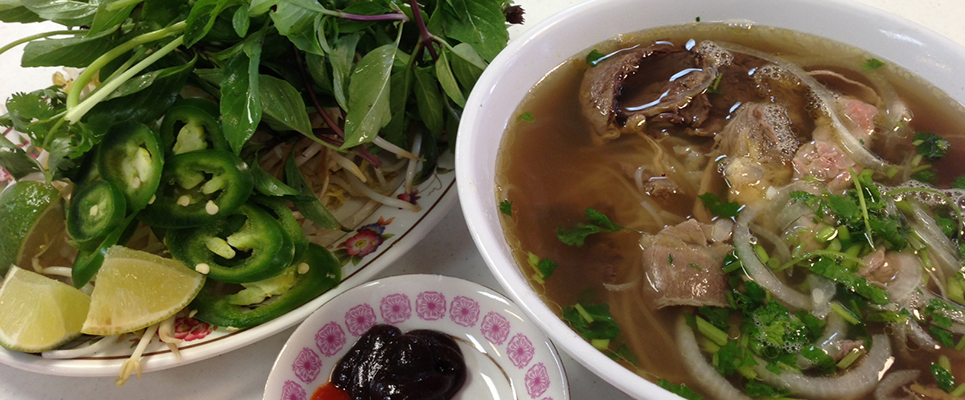
Why twelve hours is the sweet spot for our pho broth
At Pho Hong, the broth that fills every bowl of beef pho begins its life long before sunrise. In our kitchen on Rutland Drive, the stockpot is filled with beef bones, charred ginger, onion, star anise, cinnamon, and cloves by six in the morning, then left to do its quiet work for the next twelve hours. The choice of that exact window is not arbitrary. It is the result of years of testing and listening to customers who grew up with pho in places like Cabramatta in western Sydney or Springvale in Melbourne's south-east, where the Vietnamese-Australian community has refined slow-simmered broth for decades.
When people ask whether the broth could benefit from a longer simmer, the honest answer is that anything past twelve hours tips from deepening into degradation. Pho broth is a study in restraint. The aromatics lose their perfume, the bones release gritty minerals, and the clarity that makes the soup inviting turns flat. Twelve hours is the moment when collagen has fully dissolved, when the marrow has surrendered its richness, and when the spices have infused without overwhelming. Past that line, the broth becomes heavy, greasy, and tired.
A bowl of good pho should taste like a clear morning. The broth should smell of star anise and charred onion without shouting, coat the back of a spoon without feeling thick, and leave the drinker wanting another sip before the noodles are gone. Our twelve-hour standard delivers that experience batch after batch, which is why our regulars in Austin and readers across the Pacific keep coming back.
The alchemy of bones and spices
The first hour of simmering is loud. Bones crack, water foams, and the surface fills with grey scum that has no place in a finished bowl. We skim constantly during this phase, and the heat stays high enough to keep the liquid rolling but not boiling. After the foam subsides, the heat drops to a gentle tremor. From this point, time becomes the only ingredient that matters.
Our spice mix is toasted dry in a wok until each pod releases its oil. Star anise goes in first for its sweetness, cinnamon follows for depth, and coriander seeds provide quiet backbone. A whole onion is blackened over an open flame, and a knob of ginger is smashed and seared the same way. These roasty notes balance the sweetness of the beef. In Melbourne's Vietnamese eateries, chefs often add a touch of fish sauce near the end, a habit we borrowed after a visit to Footscray's bustling market strip.
Twelve hours is long enough for these flavours to dissolve into a single voice. It is also long enough for the collagen in knuckles and joints to break down into gelatin, giving the broth its silky mouthfeel. Remove the pot one hour too early and the broth tastes thin; leave it four hours too long and it begins to taste stale.
What happens after the twelve-hour mark
Many home cooks assume that longer always means better. With braised meats and bean dishes, that holds true. With pho broth, the rule inverts. Around the fourteen-hour mark, the connective tissue that gave us gelatin begins to release harder minerals, primarily calcium and phosphorus, that mute the sweetness of the marrow. The broth also loses water steadily, so the concentration of fat climbs and the surface grows glossy in a way that no skimming can correct.
Spice behaviour also shifts past twelve hours. Essential oils in star anise and cloves oxidise and turn bitter. The clean perfume that defines a great pho fades into something closer to cough medicine. We have tested sixteen-hour batches more times than we would like to admit, and the result is always the same: the broth darkens, the aromatics flatten, and the drinker reaches for more sriracha to compensate, which is never a good sign.
Texture tells the rest of the story. A broth simmered too long develops a slightly grainy quality on the palate, a sign that proteins have coagulated past their welcome. By holding the line at twelve hours, we keep the mouthfeel smooth and the flavour transparent. That transparency is what allows the fresh herbs, bean sprouts, and lime at the table to do their job rather than fight against a heavy backdrop.
From Saigon to Springvale: lessons from Vietnamese Australia
Australia's Vietnamese communities have shaped the way the country eats in ways that often go unnoticed. In Cabramatta, the Saturday markets sell fresh herbs by the bag, and the smell of pho broth drifts down Canley Vale Road from sunrise. In Springvale, family-run kitchens have been refining their broths for three generations, and the standards there are unforgiving. A bowl served with a cloudy broth will be sent back; a bowl served with aromatics that have turned medicinal will simply not be ordered again.
Australian diners have also developed a sharper palate for clear broths than many visitors expect. The cafe culture in Melbourne and Sydney, where brunches of sourdough and poached eggs sit beside menus featuring congee and banh mi, has trained a generation to appreciate subtle seasoning. Vietnamese-Australian chefs balance richness with refreshment, a balance that suits the Australian climate where a heavy soup can feel punishing on a forty-degree summer afternoon in Brisbane or Adelaide.
Food safety expectations across Australia, administered under the Australia New Zealand Food Standards Code, also shape our routines. Holding broth at a controlled simmer for twelve hours requires constant temperature checks and skimming, and we document the process so nothing is left to memory. This paperwork-heavy approach may sound excessive for a family recipe, but it is the same discipline you would see in a commercial kitchen in Parramatta or Richmond, and it keeps the broth consistent whether served on a Tuesday lunch rush or a slow Sunday evening.
Comparing broth times across cuisines
Not every broth is created equal, and comparing simmering times helps highlight why pho sits in its own category. The table below outlines typical windows for a range of traditional stocks, including our own pho standard.
| Broth type | Typical simmer time | Primary bones or base | Goal of the simmer |
|---|---|---|---|
| Beef pho (Pho Hong standard) | 12 hours | Beef marrow bones, knuckles | Clarity, aroma, balanced mouthfeel |
| Classic French beef stock | 6 to 8 hours | Roasted beef bones, veal | Richness for sauces and braises |
| Chicken stock (Western) | 3 to 5 hours | Whole chicken or frames | Light body for soups and risotto |
| Ramen tonkotsu | 12 to 18 hours | Pork bones, trotters | Opaque, creamy, heavy body |
| Italian brodo | 4 to 6 hours | Beef and chicken mixed | Medium body for pasta and vegetables |
| Vietnamese canh | 45 minutes to 2 hours | Pork, shrimp, or fish | Quick, light, weeknight meal |
The contrast with tonkotsu is useful. Japanese ramen broth aims for an opaque, almost milky richness, and a long simmer is essential to that identity. Pho aims for the opposite: clarity, lift, and refreshment. Treating pho like tonkotsu is the most common mistake home cooks make, and it usually ends with a bowl heavy enough to weigh down an AFL full-back after a Saturday game.
Getting the most from every bowl
A long simmer is a luxury that many home cooks cannot afford on a weeknight, especially in cities like Brisbane or Perth where commutes stretch past an hour each way and dinner needs to be on the table by six. The good news is that the twelve-hour standard can be approached in stages. Make the broth on a quiet Sunday, cool it quickly in an ice bath, then refrigerate it for up to three days or freeze it in portion-sized blocks. If you take some home, the key is to keep the components separate and reheat gently, a method we walk through at how to reheat leftover vermicelli bowls without drying them out for anyone ordering our vermicelli bowls to-go.
If you enjoy the slow process and want to extend your cooking across cuisines, a roasted vegetable pasta sauce also rewards patience in a similar way. There is a useful walkthrough of one technique in this roasted pepper pasta guide that translates the same patience to Mediterranean cooking. A few habits separate a satisfying bowl from a forgettable one, and these are the practices we recommend to anyone enjoying our broth at home or in our dining room:
- Taste the broth plain before adding anything, so you can appreciate the twelve-hour work.
- Add herbs at the very end, not during reheating, to keep their colour and perfume.
- Use a wide bowl if you have one, since the surface area helps the aromatics open up.
- Squeeze lime gradually rather than all at once, tasting as you go.
- Finish with sliced fresh chilli if you enjoy heat, since dried chilli powder changes the flavour profile.
- Sip the broth between bites of noodles rather than alongside them, so each element shines.
- Avoid adding hoisin or chilli sauce directly into the broth, which can muddy the clarity.
Twelve hours of simmering cannot be rushed, but the care that goes into the final bowl can be replicated in any kitchen with a little patience. Whether you are sitting in our Austin dining room on a Tuesday evening or finishing a late dinner in Adelaide after a long week, the broth arrives the same way every time: clear, fragrant, and balanced, never tired.