Best beef cut for Vietnamese shaking beef
Shaking beef, or bo luc lac, is a fast stir-fry of thinly sliced beef, usually cooked with onion in a savoury soy-based sauce. It is tender rather than chewy only when the right cut is sliced thinly and hit with intense heat for a very short time.
For an Australian cook, rump steak offers the best balance of tenderness, flavour and price, while sirloin gives a more polished restaurant result. The key is fresh meat cut across the grain, not a supermarket pack that may contain narrow, inconsistent strips.
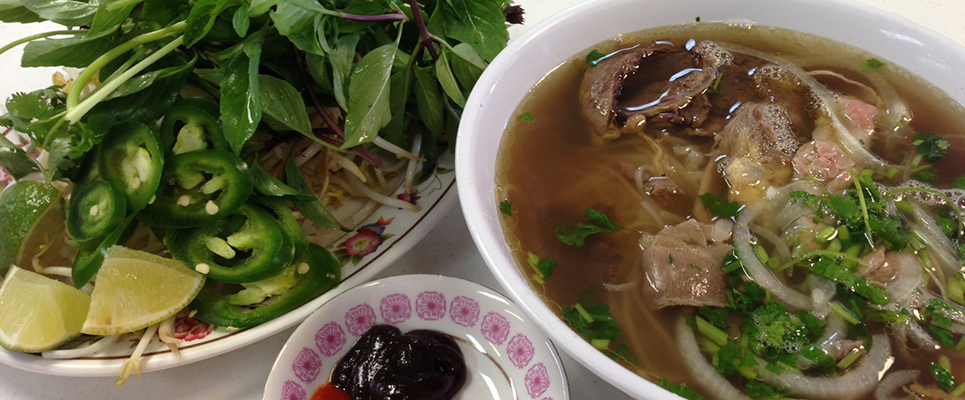
Pho Hong, the Vietnamese restaurant at 2521 Rutland Drive in Austin, serves beef pho alongside vermicelli bowls, rice plates and stir-fried noodles. Pho’s slow-cooked shank and shaking beef’s seared slices need different cuts, but both depend on control: matching the beef to the cooking method matters more than simply choosing the most expensive steak.
Why the cut matters
A good shaking-beef cut has fine fibres, moderate tenderness and enough fat to stay succulent during a brief sear. Large, chewy muscles can become stringy when sliced against the grain, while very fatty pieces overwhelm the clean character of the dish and make the final stir-fry greasy.
The cut should also suit the shape of the wok. Broad slices sear quickly but need space to turn; narrow strips cook almost instantly and can dry before the onion and sauce are ready. Even thickness is therefore as important as tenderness.
Rump, sirloin, or another steak
Rump is the most practical answer for most Australian kitchens. Its eye and centre portions slice beautifully, accept a quick marinade and have enough natural flavour for a simple dressing. Ask a butcher to trim the silverskin and slice the steak 3–4 millimetres thick, or do both at home.
Sirloin is the premium option. It is exceptionally tender when cut thinly and usually rewards hot, fast cooking. Tenderloin, often labelled eye fillet at Australian butchers, is easier still, but its high price and delicate texture can be less interesting than well-prepared rump or sirloin.
Flank and skirt steak are workable alternatives, provided the grain is identified and every slice crosses it. Their stronger flavour suits a chargrilled or hot-plate version, but they are less forgiving if the knife travels in the wrong direction. At Australian butchers and supermarkets, MSA-graded rump is a useful quality cue, although cut and thickness matter more here than the grade alone.
Preparing the beef for a fast stir-fry
Chill the steak briefly, then sharpen the knife before cutting. Lay the meat flat and locate the direction of the fibres; slice steadily across them rather than sawing through the steak. Pieces of roughly 3–4 millimetres will sear on both sides while remaining tender at the centre.
Mix only a light coating of soy sauce, garlic and a little sugar just before cooking; a salty marinade left too long can draw moisture from the meat. Fish sauce can add depth in place of some soy, while sesame oil is better added near the end so its aroma stays clear.
Heat a wok or heavy pan until it is genuinely smoking, add a thin film of neutral oil, and cook the beef in small batches. Crowding drops the temperature and starts steaming. Give each slice only seconds to colour, remove it, cook the onion, then return everything to the pan with the sauce and toss once.
Building the dish
Shaking beef is normally served immediately over steamed rice, often with lettuce, tomato, herbs and lightly pickled carrot or daikon. The cool vegetables and acidity balance the hot, salty beef, while rice absorbs the sauce without allowing the platter to become heavy.
Texture deserves attention as much as flavour. Crispness is familiar in Australian café brunches, where hash browns contrast with softer breakfast dishes, and Village Pie’s crispy hash brown method shows the value of a properly heated surface. For shaking beef, that principle applies to the seared edges of the beef and the fresh crunch of the salad.
Shaking beef in an Australian kitchen
At home, the dish works as a fast weekday dinner or as the centrepiece of a weekend barbecue. Many diners are comfortable with steak cut by a butcher, but presenting sliced beef on a cast-iron hot plate with rice and salad brings it close to the lively restaurant and pub-style format common in Australia.
Pho Hong’s broader menu shows another side of Vietnamese cooking. Its seasoned pho broth guide explains why aroma and taste need checking rather than relying on the clock alone. The same attention to balance helps a quick stir-fry: the sauce should be savoury and fragrant, not aggressively salty.
For diners in Melbourne and Sydney, Vietnamese restaurants and Asian supermarkets are easy to find, including around Footscray and Cabramatta. Buying a small quantity of good steak from a local butcher and adding a bag of herbs, lettuce and fresh rice from an Asian grocer often produces a better plate than relying entirely on a prepared stir-fry mix.
A practical buying and cooking checklist
The shortlist is straightforward: choose rump for value and versatility, sirloin for a restaurant-like texture, or tenderloin when tenderness and budget are not the main concerns. Avoid very fatty or heavily connective pieces, and buy enough fresh beef to slice evenly rather than stretching thin strips.
The main candidates differ in the ways that matter for a very hot pan and a brief cooking time.
| Beef cut | Texture and flavour | Best use | Main caution |
|---|---|---|---|
| Rump steak | Tender across the grain, clean beef flavour | Everyday home cooking | Trim hard fat; do not overcook |
| Sirloin or striploin | Very tender, slightly richer | Restaurant-style results | Often costly; slice while chilled |
| Tenderloin | Very tender and mild | Delicate, premium version | Expensive and easy to dry |
| Flank or skirt | Lean, pronounced flavour | Hot plates and confident slicing | Tough if cut with the grain |
| Ribeye | Rich, soft texture | A more decadent plate | Fat cap and heavier flavour |
For a repeatable result, keep the preparation simple and follow these practical steps.
- Buy fresh rump and ask the butcher to slice it 3–4 millimetres across the grain.
- Check pre-sliced beef for even thickness and avoid packets containing long, grain-aligned strips.
- Mix the sauce shortly before cooking and use it lightly, tasting before adding extra salt.
- Preheat the wok or heavy pan fully, then sear the beef in small batches.
- Cook the beef only until its edges colour and the centre is just done.
- Serve at once with rice, fresh herbs, lettuce and a sharp pickled garnish.