How to eat pho like a local: slurping and dipping techniques
Pho has become a fixture of Australia's urban food map, with steamy bowls served in laneway eateries from Melbourne's Richmond strip to Sydney's Cabramatta. For many Australians, the ritual still feels unfamiliar: broth arrives scorching, herbs pile high, and the etiquette around chopsticks, spoons, and dipping sauce can feel like a quiet code. Learning how to eat pho like a local is less about rigid rules and more about embracing habits that turn the meal from a cautious first try into a satisfying daily ritual.
The Vietnamese approach treats the bowl as a balanced ecosystem of broth, noodles, meat, herbs, and condiments, where every component plays a role. Slurping noodles and broth is welcomed, signalling enjoyment and helping cool the soup. Dipping is an art of restraint, applied to specific proteins rather than the entire bowl. A handful of small adjustments shift the experience from hesitant to confident.
Whether you sit down at a busy Cabramatta kitchen on a chilly Sydney evening or order delivery during a wet Brisbane weekend, these techniques translate across settings. The guide below covers the customs that make pho feel natural, alongside a quick comparison of the utensils that will shape your meal.
Knowing your bowl before the first bite
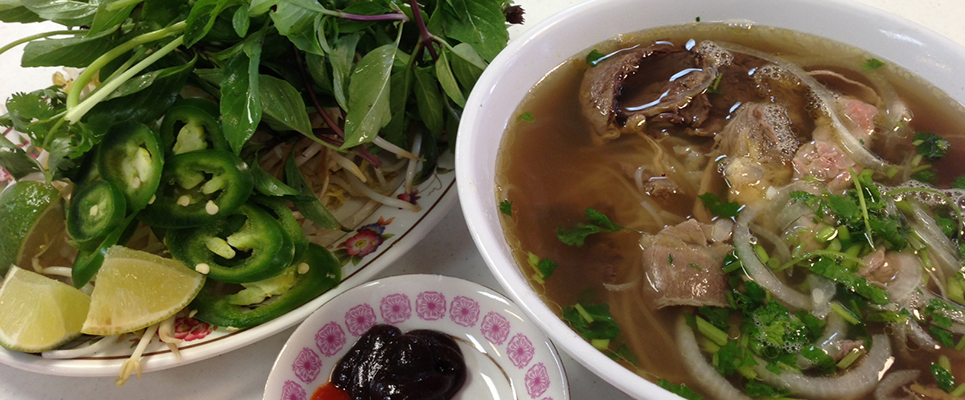
A typical beef pho arrives with distinct components: clear aromatic broth, flat rice noodles, thin slices of beef, and a side plate of fresh herbs, bean sprouts, lime wedges, and sliced chili. The broth is the foundation, and tasting it unadorned is the first step. Take a small spoonful before adding anything so you can appreciate the star anise, cinnamon, and charred ginger notes that define the soup.
Australians used to heartier soups sometimes rush past this initial taste, reaching immediately for the sauce station. Slowing down for a clean first sip helps calibrate the seasoning and decides whether the broth needs a splash of fish sauce, a squeeze of lime, or simply nothing. This quiet moment also lets the noodles soften slightly, improving texture when you lift them later.
If you are exploring Vietnamese cooking beyond the bowl, Pho Hong's shaking beef recipe offers another classic that pairs well with rice plates and vermicelli.
Why slurping is polite, not rude
In Vietnamese dining culture, slurping noodles and broth is an honest compliment to the cook, and it serves a practical purpose. Gentle suction cools hot liquid as it travels to your mouth, preventing burns and allowing full flavour to register on the palate. Restaurants in Melbourne's Footscray rarely see diners apologising for the sound.
The technique is simple. Tilt the bowl slightly toward you, lift a small tangle of noodles, and draw air through them as you bring them to your mouth. The result is a quiet hiss that signals enthusiasm. The same applies to broth sipped directly from the spoon, where a small breath across the surface releases aromatic oils.
Australia's relaxed dining norms make this habit easy to adopt, especially in casual spots where conversations are lively. Within a few visits, the slurp feels less like an oddity and more like the natural punctuation of a comforting meal.
Chopsticks, spoon, and the unspoken partnership
| Utensil | Primary use | Common slip |
|---|---|---|
| Chopsticks | Lift noodles, meat, herbs | Treating them like a fork for stabbing only |
| Soup spoon | Sip broth, balance noodles | Setting it aside while eating |
| Combined grip | Lift and sip in one motion | Stirring the entire bowl aggressively |
The chopstick-and-spoon combo is the heart of Vietnamese table manners. Chopsticks handle solid ingredients while the soup spoon catches drips, broth, and any noodles that escape. Holding the spoon in your non-dominant hand and chopsticks in the dominant one creates a smooth rhythm.
Australians used to a fork-and-knife setup often default to a fork, especially when noodles slip. Switching to chopsticks, even imperfectly, signals respect for the cuisine and improves control. A useful tip from Sydney pho veterans: pinch noodles near the top of the chopsticks rather than the middle, which gives better leverage. The spoon stays close, ready to catch anything that falls.
The dipping ritual with sriracha and hoisin
Pho dipping is a delicate business, and locals rarely drown the entire bowl in sauce. Small saucers hold a modest amount of hoisin, often lightened with a touch of sriracha, used specifically for meat rather than noodles or broth. The idea is to enhance, not mask, the broth's clarity.
A traditional approach involves placing a spoonful of hoisin on the saucer, drawing a thin line of sriracha through it, and mixing lightly. The protein is dipped briefly before being lifted to the mouth. Australians who grew up pairing sweet chilli sauce with spring rolls sometimes overdo the quantity; a lighter hand preserves the broth's depth and keeps the balance intact.
If you are recreating the experience at home, learning how to assemble the perfect pho at home provides a useful foundation for choosing cuts, broth strength, and garnishes that work with this dipping style.
Herbs, lime, and the finishing touch
The plate of herbs that arrives with pho is not garnish to be ignored. Thai basil, sawtooth coriander, and mint bring freshness that lifts the broth, while bean sprouts add crunch and sliced chili delivers heat. A squeeze of lime brightens the bowl, especially important during Australia's cooler months when slow-cooked meals tend to dominate dinner tables.
Add herbs gradually rather than all at once so you can taste how each one changes the profile. A handful of bean sprouts goes in early to soften, while mint and basil are torn and stirred in just before sipping to preserve aroma. Chili can be introduced slice by slice, giving control over the heat level, which helps diners still discovering their tolerance.
Under FSANZ standards, fresh herbs served at restaurants must be thoroughly washed and handled with care, and reputable Vietnamese kitchens in Brisbane, Perth, and Hobart follow these rules closely. When herbs arrive vibrant and crisp, it is a good sign that the kitchen takes its produce seriously.
Eating pho through the Australian seasons
In Australia, pho offers particular comfort during winter, when June and July bring cooler nights across Sydney, Canberra, and even Darwin's mild dry season. Restaurants often see queues after sunset, and the bowl's warmth feels especially welcome. During summer, lighter pho ga or a smaller portion with extra herbs can replace heavier beef versions without losing the ritual.
Australians also tend to share dishes more casually than in some other cultures, so a group might order several bowls alongside spring rolls or Vietnamese coffee. This communal approach pairs naturally with pho, where each diner customises their bowl but draws from the same herbs and condiments.
Bringing this mindset into the meal keeps the experience social and unhurried, the way it is enjoyed in family kitchens across Vietnam and replicated in suburban Vietnamese eateries from Parramatta to Geelong.